Helen Rose Outdoor Diary: Cairneyhill to North Queensferry
April, 2026
Fife Coastal Path
The Glasgow HF Outdoors Club is organising stages of the Fife Coastal Path with a view to completing it this year. The Fife Coastal Path is a long-distance walking trail of around 117 miles (188km) long. It starts in Kincardine in West Fife and ends in Newburgh in North Fife. Fife is a peninsula bordered by the Firth of Tay to the north, the North Sea to the east and the Firth of Forth to the south, Clackmannanshire to the south-west, and Perth and Kinross to the west. I have walked most of the coastal path but Cairneyhill to North Queensferry was a new section for me. The walk is linear and involved car shuttling. We drove to North Queensferry via the M8 from Glasgow and across the Forth Road Bridge at the Queensferry crossing.
Forth Rail Bridge
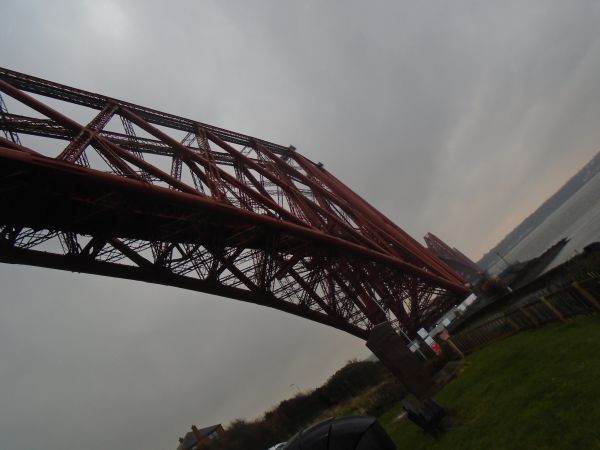
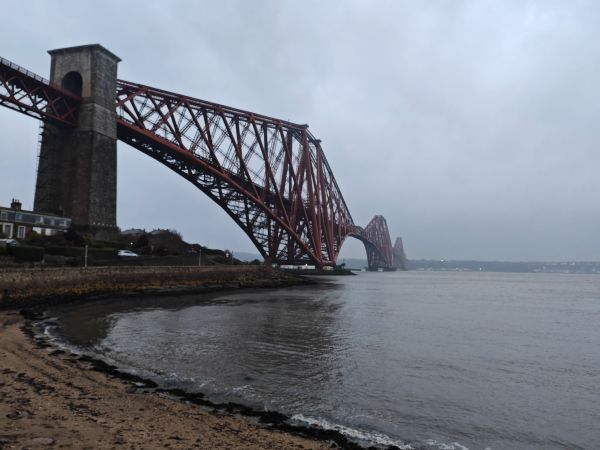
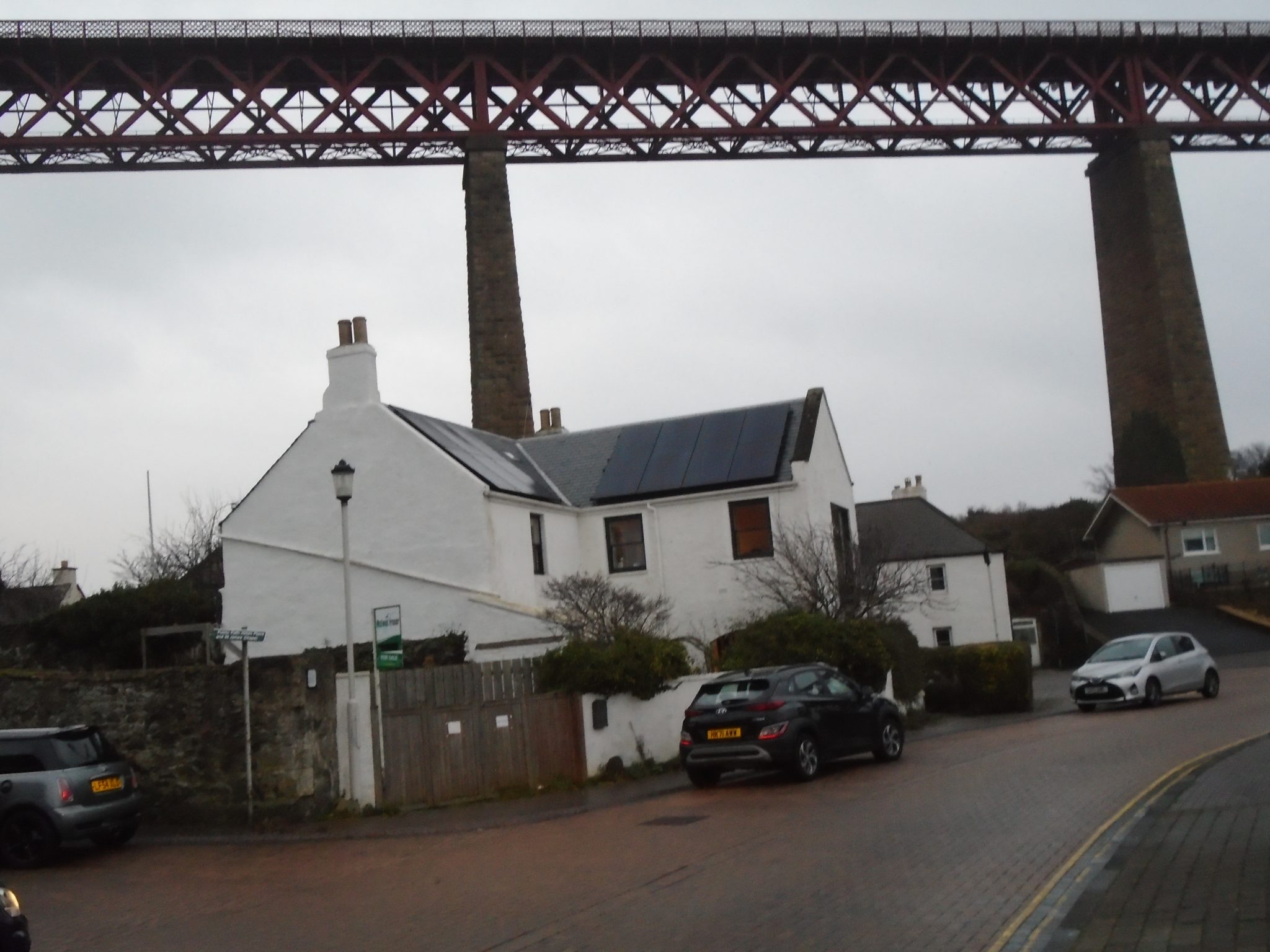
Most 0f the cars were left at North Queensferry as the walk ended there. Some cars took us all to Cairneyhill to start the walk and the cars were left there to be picked up later. Standing under the iconic Forth Rail Bridge and looking at the girders was awesome. Construction of the bridge began in 1882 and it was opened on 4 March 1890 by the Duke of Rothesay the future King Edward VII. The bridge carries the Edinburgh to Aberdeen trainline across the Forth River between the villages of South Queensferry and North Queensferry and has a total length of 2,467 metres (8,094 ft). When it opened it had the longest single cantilever bridge span in the world, until 1919 when the single 1,801 ft (549 m) span Quebec Bridge in Canada was completed. It continues to be the world’s second-longest single cantilever span, with two spans of 1,709 feet (521 m). An amazing feat of engineering.
Limekilns
From Cairneyhill the walk was not the most interesting of the Coastal Path being mainly on pavement and road but there were a few surprises along the way. We stopped for refreshments at the cute little village of Limekilns where we had good views of the Forth Estuary. Limekilns was mainly a fishing village, with the large natural harbour, sheltered by the rocky ridge known as The Ghauts, providing docking facilities for small to medium transport and cargo ships. From here ships traded with the ports in the Baltic Sea and France until the seventeenth century when the Union of the Crowns saw the royal interests move south to London. In the early 14th century there was a port for the town of Dunfermline, called Galletts, at the site of the current settlement of Limekilns, this served as the principal port for the town which lies a few miles inland.
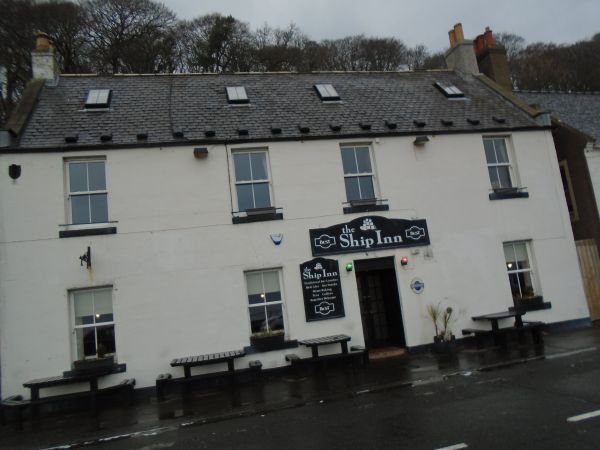
The importance of the local limestone became clear quite early in the village’s history, being used both as a fertiliser and for the manufacture of mortar used in the construction of stone buildings. Workings using kilns fuelled by charcoal and later coal to convert lime to quicklime grew up, the product being exported from the port along the east coast of Scotland. Today the only tangible legacy of this industry in the village is the name Limekilns. In the 1750s the lime industry transferred a mile or so west along the coast to Charlestown, where the ruins of the massive kilns still exist today.
Rosyth Dockyard
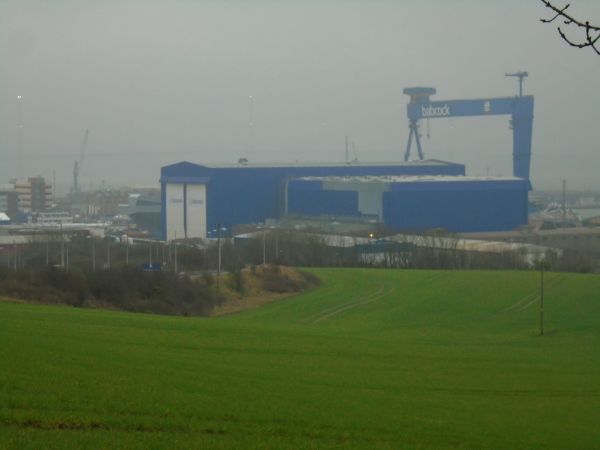
As the walk progressed we passed Rosyth Dockyard which is a major naval engineering hub and shipyard operated by Babcock Engineering. Established in 1909 for World War I battleship support, it is now famous for assembling the Royal Navy’s Queen Elizabeth-class aircraft carriers and building Type 31 frigates. The 320-acre site provides comprehensive repair, maintenance, and nuclear submarine decommissioning. We saw an aircraft carrier under construction.
Rosyth Castle
Rosyth Castle is a fifteenth-century ruined tower house near the Naval Dockyard. It originally stood on a small island in the Firth of Forth accessible only at low tide, and dates from around 1450, built as a secure residence by Sir David Stewart, who had been granted the Barony of Rosyth in 1428. The original tower house (58 feet high) was enlarged and extended in the 16th and early 17th centuries. It remained a Stewart residence until it was sold in the late seventeenth century to David Drummond. It ultimately ended up in the possession of the Earl of Hopetoun and from the eighteenth century onward remained unoccupied.
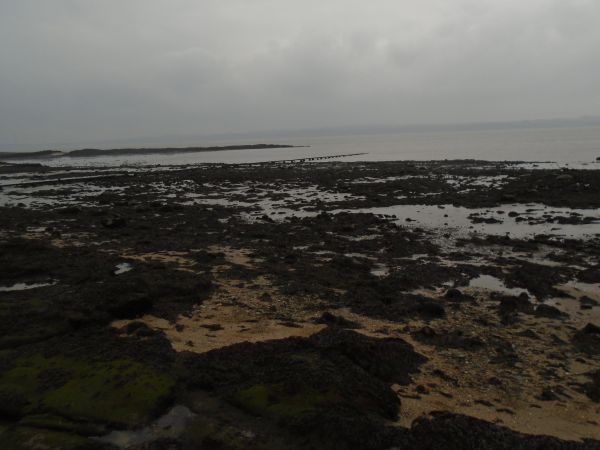
It became Admiralty property in 1903 and as the result of land reclamation lost its waterfront position, becoming marooned within the dockyard. Although plans were made to restore and use the building, they came to nothing and the structure was made safe in its current condition. It passed into private hands when large tracts of the surrounding dockyard were sold.
Dovecot
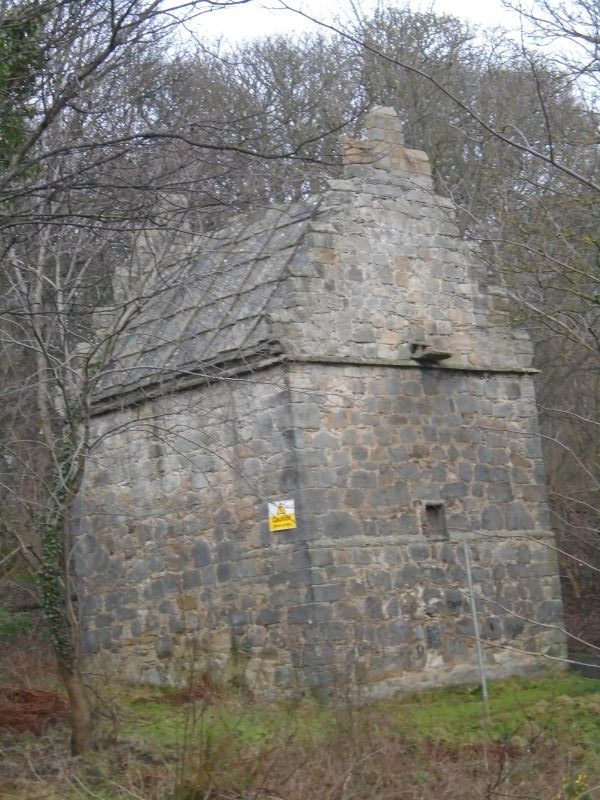
About half a mile north of the castle is a well-preserved sixteenth-century dovecot, with a crow-stepped gable roof and carved heads at two corners. Internally it has a barrel-vaulted ceiling. We call Dovecots Doocots as pigeons are doos here! It was a nice spot to stop for afternoon refreshments sitting on the grass.
Three Bridges
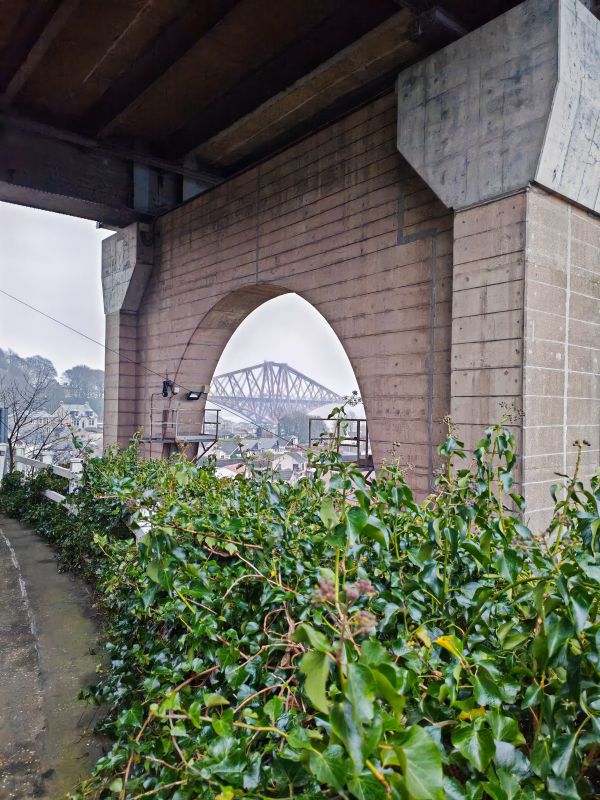
We reached North Queensferry and looked up in awe at the three bridges. The Forth Rail Bridge is the most spectacular but the other two road bridges are interesting. The new road bridge known as the Queensferry Crossing is wonderful to see and looks almost like the sales of a ship. The old road bridge has been retained for commercial traffic as apparently it is cheaper to maintain it than to demolish it but correct me if I am wrong. I have been advised these bridges are unique as this is the only place in the world where three distinct, major bridges from three different centuries stand together.
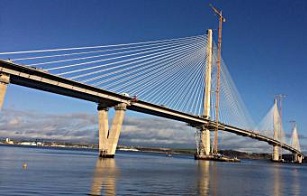
Queensferry Crossing
Toilet Drama
The Portakabin toilet is admission by paying a small fee with a card. However, one of our members got locked in and despite us trying everything to open the door it would not give way. You can imagine how it feels to be locked in a public toilet so someone took a run at the door with shoulder to it and it opened thankfully as a very traumatised person emerged.
Coming attraction; Fairlie
. .
This section: Helen Rose Hillwalking Diary, Pat's Home Page Blog
Filed under: Helen Rose Hillwalking Diary, Pat's Home Page Blog
Prevous page or post | Next page or post
Written by : Helen Rose
 Scottish hill walker and writer for Pat's Guide to Glasgow West End.
Related Pages
- Spiral Scratch – Kevin Gilday New Material plus Open Mic
- Off the Beatson Track Fundraiser
- The Man Who Wasn’t There – 4K at GFT
- Bangla Mela, Celebrating Commonwealth Games 2026
- Overhaul Live in Store, LNFG
- All Elements Scottish Hip Hop Jam 2026
- Terry Neason Songs and Words, Òran Mór
- tell it slant at Locavore
- ‘Premature’: First clip released from brand new Scottish rom-com
- Commonwealth Community Festival
- Alasdair Gray Archive – Matthew Arthur Williams: Holding Ground
- Wullie Davidson Bus Pass Rambles: Walk to Steall Falls in Glen Nevis
- Going for Gold: Young Talent 2026 at ProjectAbility
- Arepas for Venezuela – Fundraiser
- Take 2: Muppet Treasure Island at GFT
- Wildlife Watch at The Saltings: An Introduction to Wildlife Recording
- Exhibition Faifley Art Group
- Scottish Writers Centre Speakeasy The Griffin
- Watershed Festival at The Briggait
- Gaggle