Helen Rose Outdoor Diary, Fairlie
May, 2026
The Health Culture Rambling Club organised a walk from West Kilbride to Fairlie in spring time. There was train disruption at Glasgow Central Station due to a fire in an adjacent listed building which is a sad loss to the city as it had to be demolished due to Health and Safety.
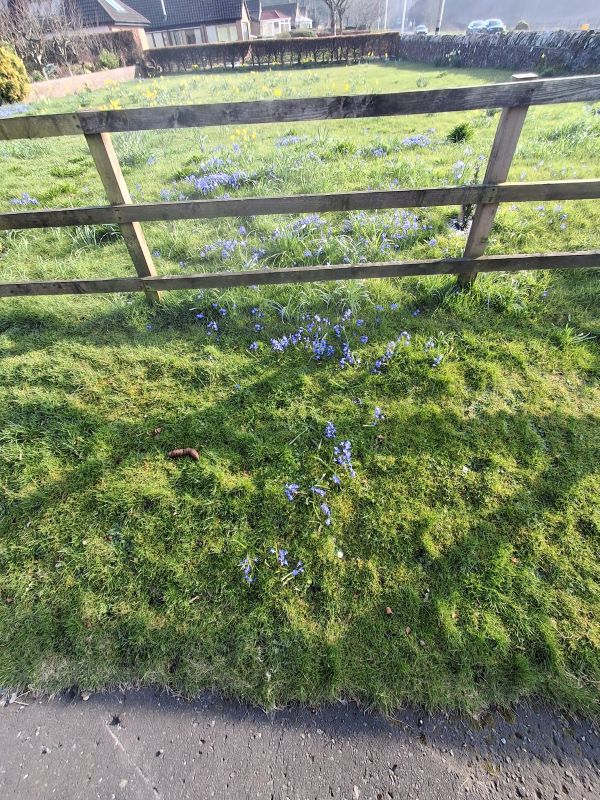
West Kilbride is on the Ayrshire Coast and we have visited it many times before on the Ayrshire Coastal Trail. It was a surprisingly warm dry day as we set out on the coastal path. We could hear foghorns as there was a thick haar or sea fret – a cold sea fog that forms when relatively warm, moist air passes over a colder sea surface.
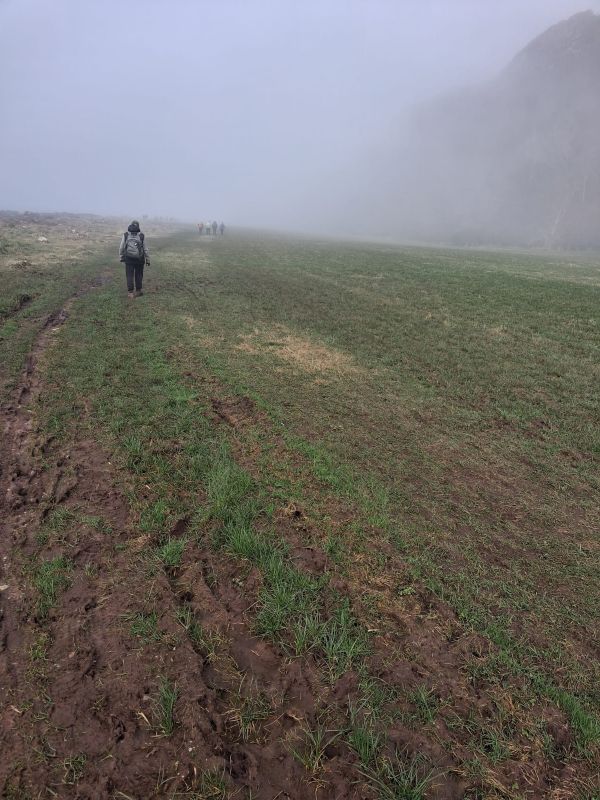
Unusually, the Island of Arran was not visible. We later found out the ferries had been cancelled and the foot passengers were put up in Brodick Community Hall on comfortable camp beds that night as all the accommodation in Arran was fully booked
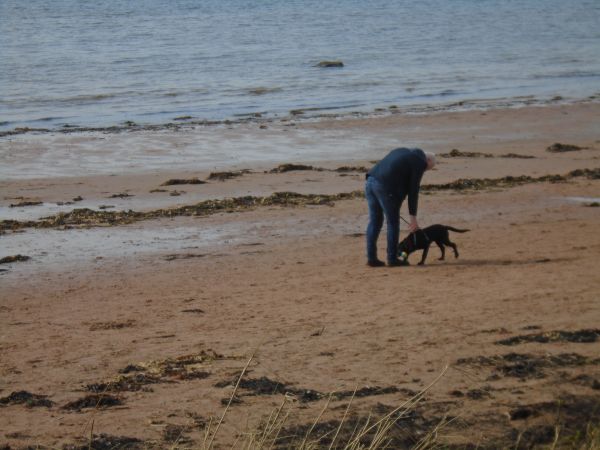
On the coastal path, the beach was surprisingly quiet given the dry warmish weather.
Hunterston
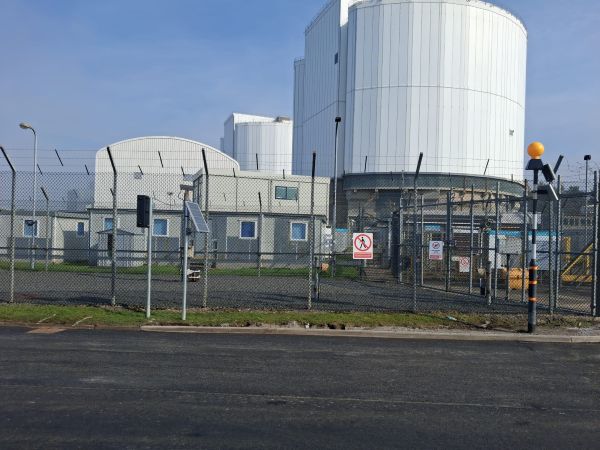
Our walk continued to Portencross Castle where we stopped at the picnic benches for lunch overlooking the sea but still no Arran in sight! After lunch we walked to the next point of interest at Hunterston Power Station currently closed. Hunterston B is a decommissioned nuclear power station that completed defuelling in April 2025 after 46 years of operation, officially becoming “nuclear free”. Operated by EDF Energy, the site shut down in January 2022 following the discovery of graphite core cracks, with its decommissioning now leading to a decade-long dismantling project managed by Nuclear Restoration Service. We walked on to our final destination at Fairlie.
Fairlie
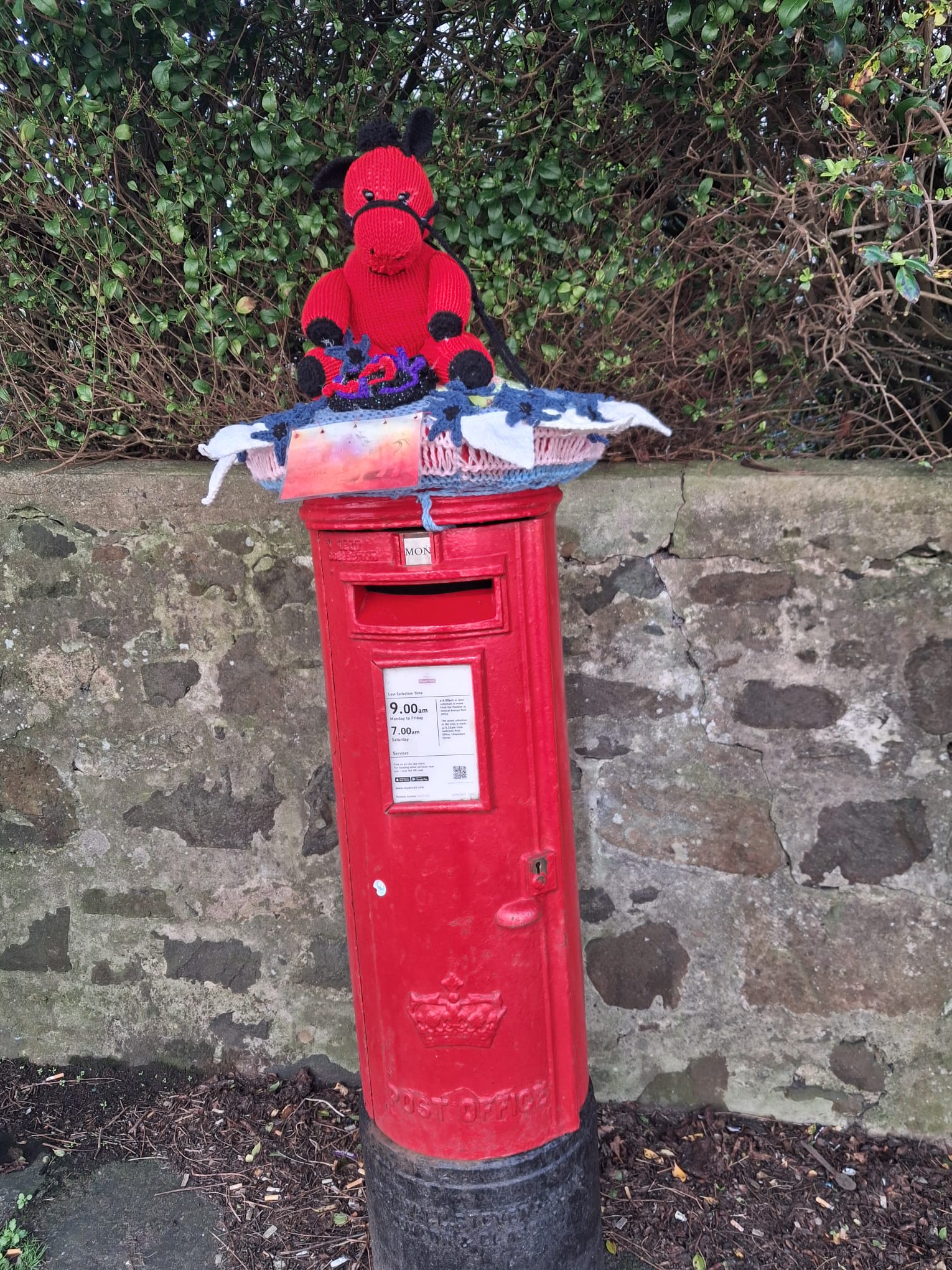
Walking in to Fairlie, we passed a post box with a very colourful knitted cap. A post box topper is any display of crafting placed on top of a pillar box or other style of post box for public enjoyment. In the United Kingdom they are often designed as a tribute or commemoration. Royal Mail said they first began to see these toppers in 2012 over the festive season, although this soon spread to other key times of the year such as Easter.
Fife Regatta
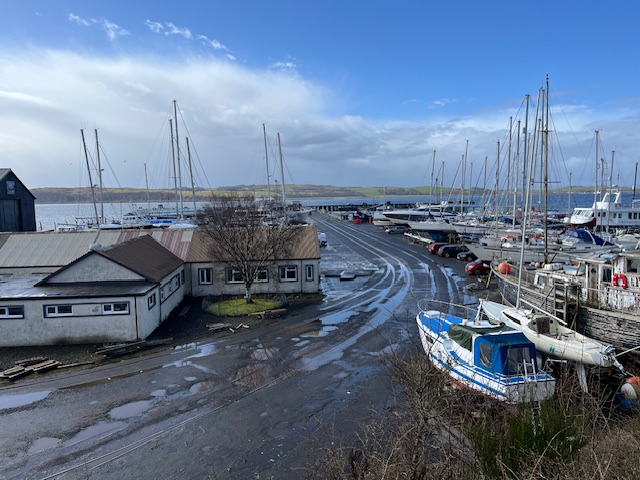
Later, I found out there was a very famous wooden boatbuilder long since gone as Fairlie also has a marina. The Regatta is held to this day. The Richard Milne Fife Regatta will be held from June 4th – 12th, 2026, on the Firth of Clyde . Based out of Largs Yacht Haven, the event brings together classic Fyfe yachts for racing, with scheduled stops in Rothesay, Isle of Bute, and Portavadie, Loch Fyne.
Fife Boatbuilders
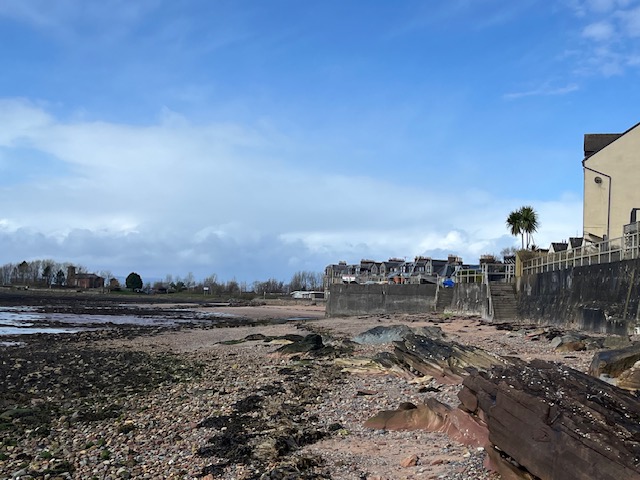
William Fife, an excellent craftsman, keen to build more refined sailing boats, he was advised to read Steele’s Naval Architecture by a client, James Smith of Jordanhill, Glasgow. As a result, he built his first large yacht, Lamlash in 1812. This was the year when Henry Bell launched his steam paddle ship, the Comet. Two years later William Fife had built Industry, a steam paddle ship commissioned by a group of businessmen from Beith. She was so successful that he was asked to build more but he declined, saying that he wanted to build sailing boats, which were “fast and bonnie”.
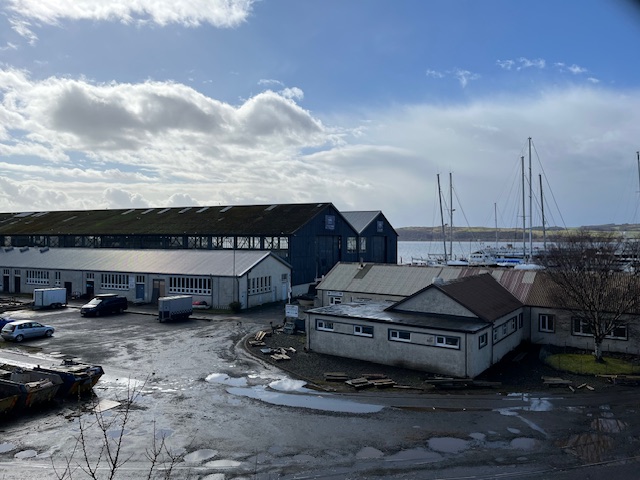
William’s boats were built in the open on the foreshore, which he rented from the Earl of Glasgow. At first there was only a sawpit and a small blacksmith’s smithy. At that time there was no demand for pleasure yachts and William handed that side of the business over to his son William when he became eighteen. The first William continued to build fishing and trading vessels but the second William had a hard time until 1849 when he built Stella and from then on the yard began to build mainly yachts.
The Industrial Revolution had given rise to an affluent class of people who turned their attention to pleasure yachts and yacht racing. The second William Fife, already in business, was in a position to benefit from this development and sudden demand for yachts. He increased the output from the yard and made the name famous wherever there was a gathering of yachts. The success of the yard was not only due to the fact that he could design beautiful and fast yachts, the villagers of Fairlie were also superb craftsmen and the two together were responsible for the reputation of Fife-built yachts.
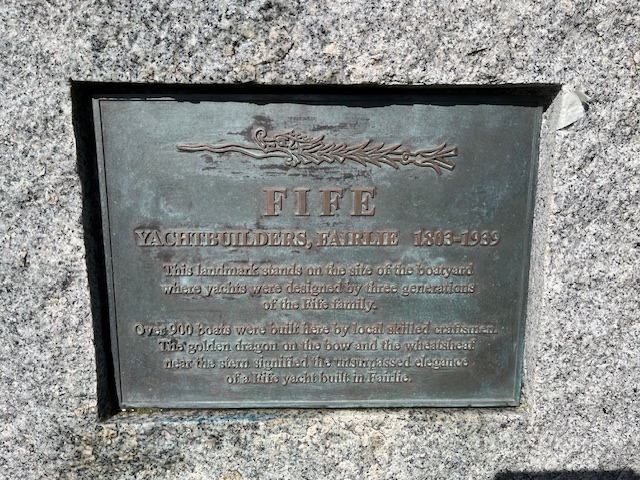
The first and second William Fifes had natural genius, were craftsmen in their own right and knew how to get the best out of a boat when sailing. The third William Fife came to an already well-established business with a worldwide reputation. The third William Fife had a more formal training than his father and grandfather but the spark of genius had been passed on to the third generation. In 1885 he joined his father in partnership of the yard. After his apprenticeship he had spent some time in the yard of James Fullerton of Paisley where he learned about composite construction. He was then appointed manager of the Culzean Shipbuilding Company founded by the Marquis of Ailsa. Both William Fife Senior and Willliam Fife Junior had shares in the company.
The second William Fife died in 1902 and by this time the yard took up a large part of the foreshore and was fully under cover. There was acetylene lighting, woodworking machinery, lead founding, brass founding and iron founding. Instead of importing American hollow spars the yard made their own.
The third William Fife is probably the most famous of them all and is remembered for his designs for Sir Thomas Lipton’s America’s Cup challengers Shamrock I and Shamrock III and the 23 Metre Shamrock, his designs for the metre classes especially the 6 Metres, various one-design classes, many beautiful cruising yachts and ocean racers. He died in 1944 and his nephew Robert Balderston sold the business after the Second World War. The third William Fife had a more formal training than his father and grandfather but the spark of genius had been passed on to the third generation. The yard took up a large part of the foreshore and was fully under cover. There was acetylene lighting, woodworking machinery, lead founding, brass founding and iron founding. Instead of importing American hollow spars the yard made their own.
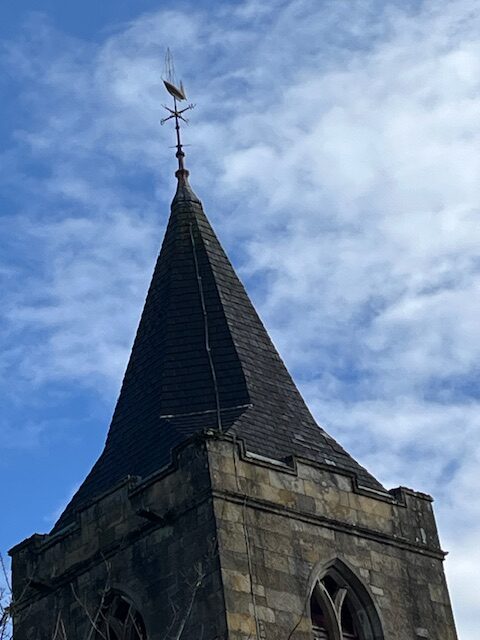
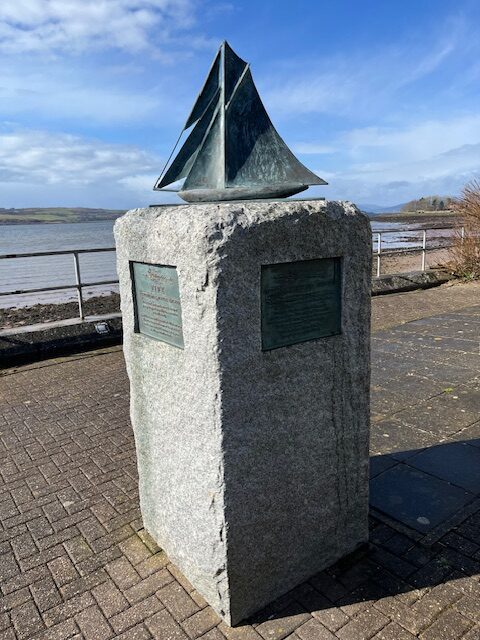
Fairlie has monuments to the Boatbuider and even the Church Steeple acknowledges it by having a boat on top.
A big thank you to Margaret for telling me about the boatyard and regatta and providing the photos.
Coming attractions; Aviemore Again and Fife Coastal Path, Elie
This section: Helen Rose Hillwalking Diary, Pat's Home Page Blog
Filed under: Helen Rose Hillwalking Diary, Pat's Home Page Blog
Prevous page or post | Next page or post
Written by : Helen Rose
 Scottish hill walker and writer for Pat's Guide to Glasgow West End.
Related Pages
- Pressure at GFT
- Mackenzies: A Dog’s Breakfast Album Release LNFG
- Social Dancing Maryhill Burgh Halls
- Glass and Concrete Project Launch
- Siskin Green – Living in the Echo at Cottiers
- Take 2: Horton Hears A Hoo at GFT
- Ando Glaso Roma Fest – Symposium University of Glasgow
- ‘Premature’: First clip released from brand new Scottish rom-com
- Wully Davidson: Climate Change – Glacial Lake Outflow Floods & Glacier Collapse Floods
- Helen Rose Outdoor Diary: Falkland.
- Yorkhill Gala Day 2026
- Sea Shanty Workshop
- Hillhead Beer and Food Festival
- Govan Book Festival – In Conversation with Alan Dimmick
- Brutal Glasgow Trail
- Every Picture Tells A Story – Exhibition Maryhill Burgh Halls
- Doors Open Days: Old Kilpatrick Graveyard Walk and Talk
- Drawing the Past: Still Life with Singer Sewing Machines
- Launch of Books by Lesley Benzie and Graham Fulton
- Ann MacKinnon, Scottish Writers Centre