Helen Rose Outdoor Diary: Elie Chain Walk.
July, 2026
This is a continuation of the Glasgow HF Outdoor Club completing the Fife Coastal Path this year. This stretch is Lower Largo to St Monance. This is a long day out as the drive is over two hours from Glasgow. The drive was to Lower Largo and walking to St Monance where we caught a bus back to Lower Largo to pick up the cars for the drive home. JP had worked out the timing to catch the bus.
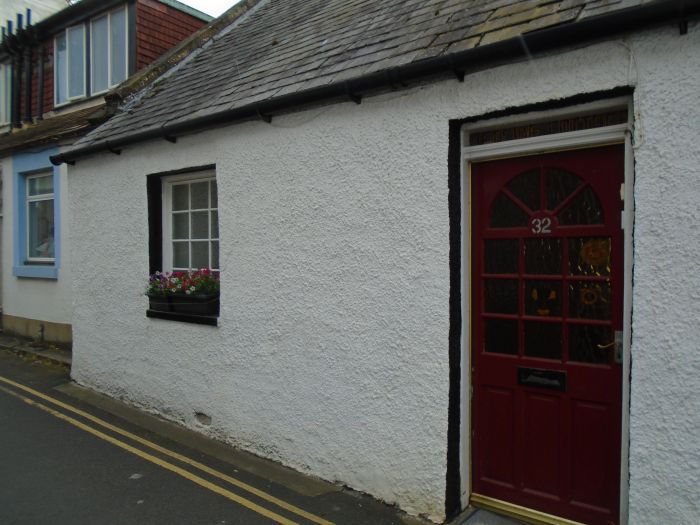
Lower Largo
Lower Largo is a cute little town situated on Largo Bay on the north side of the Firth of Forth. Largo is an ancient fishing village. An excavated late 5th century cemetery points to an early settlement of the site, and there are records of the Knights Templar holding lands to the east of the town in the 12th century. It was made a “burgh of barony” by James IV for Sir Andrew Wood in August 1513.[ This meant it had the right to erect a mercat cross and hold weekly markets, but not the extensive trading rights of a royal burgh.[ In 1654, Dutch cartographer Joan Blaeu mentions Largo as “Largow burne-mouth” in his Nova Fifae Descriptio.
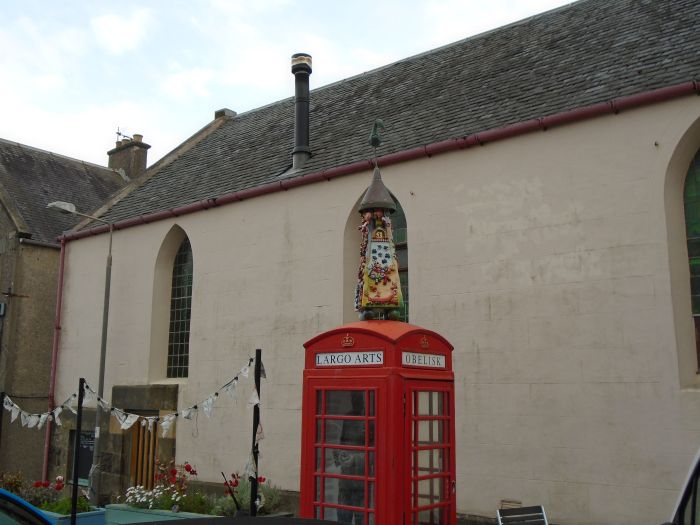
Lower Largo is famous as the 1676 birthplace of Alexander Selkirk, who provided inspiration for Daniel Defoe’s Robinson Crusoe. The house that now stands at his birthplace on 99-105 Main Street features a life-sized statue of Selkirk wearing self-made goatskin clothes, scanning the horizon. A signpost at the harbour points to Juan Fernández Islands, some 7,500 miles distant, where Selkirk lived for more than four years as a castaway. I liked the sculpture in the town.
Walk to Elie
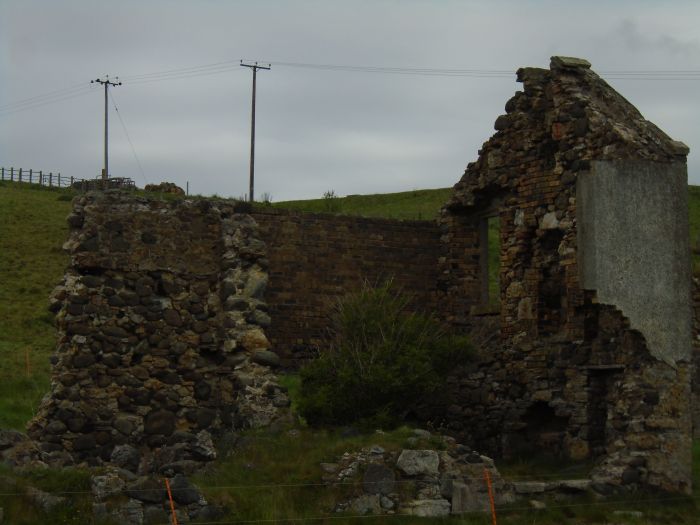
We left the harbour to join the coastal path passing a derelict croft house overlooking the sea. A croft is a traditional Scottish term for a fenced or enclosed area of land. It is usually small and arable, and typically, though not always, includes a crofter’s dwelling. A crofter is a person who has tenure and use of the land, typically as a tenant farmer in rural areas. It is always sad to see abandoned crofts and makes you wonder who lived there and why they left.
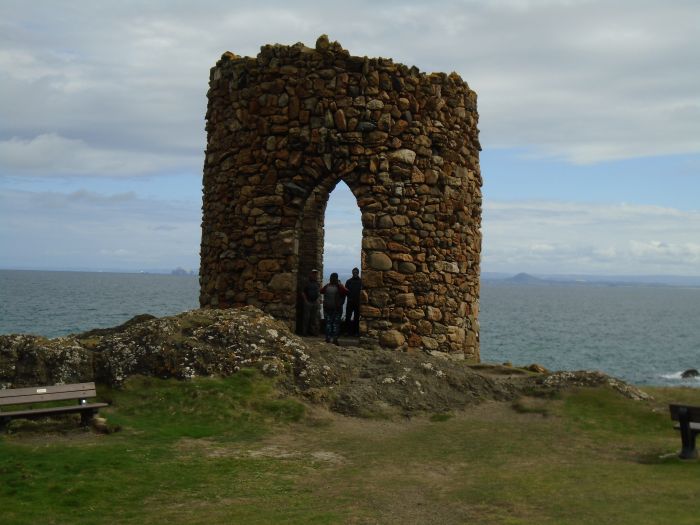
Further on there was an impressive arch way overlooking the sea so we left the path to spend time looking out to sea from the path and feeling very grand.
Second World War
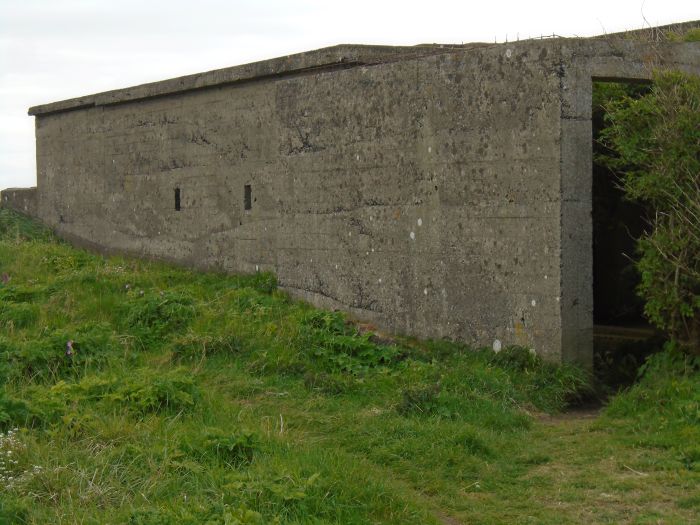
During the Second World War, the Elie area served as a crucial site for Allied coastal defence and as a specialized training base for exiled Polish forces. Concrete anti-tank blocks, pillboxes and observation posts were established along the coastline to guard against a potential German amphibious invasion. Kincraig Point, a rocky promontory west of Earlsferry, was formally selected as the headquarters and training ground for the 1st Independent Polish Parachute Brigade under General Stanisław Sosabowski. The Polish troops, who also manned the surrounding coastal defences, alsp practiced aggressive cliff-scrambling and simulated commando parachute drops into the area. The brigade later achieved historical fame for its combat at Arnhem in September 1944. The coastline featured military outlooks, gun emplacements, and defended barracks. The strategic waters of the Firth of Forth meant the broader East Neuk of Fife was heavily militarised, requiring soldiers to “self-defend” the batteries in case of commando landings. For example, the historic Elie Chainwalk, first installed in the 1920s to aid movement across the rugged sea cliffs, was repurposed by soldiers patrolling these wartime lookout posts.
Elie Chain Walk
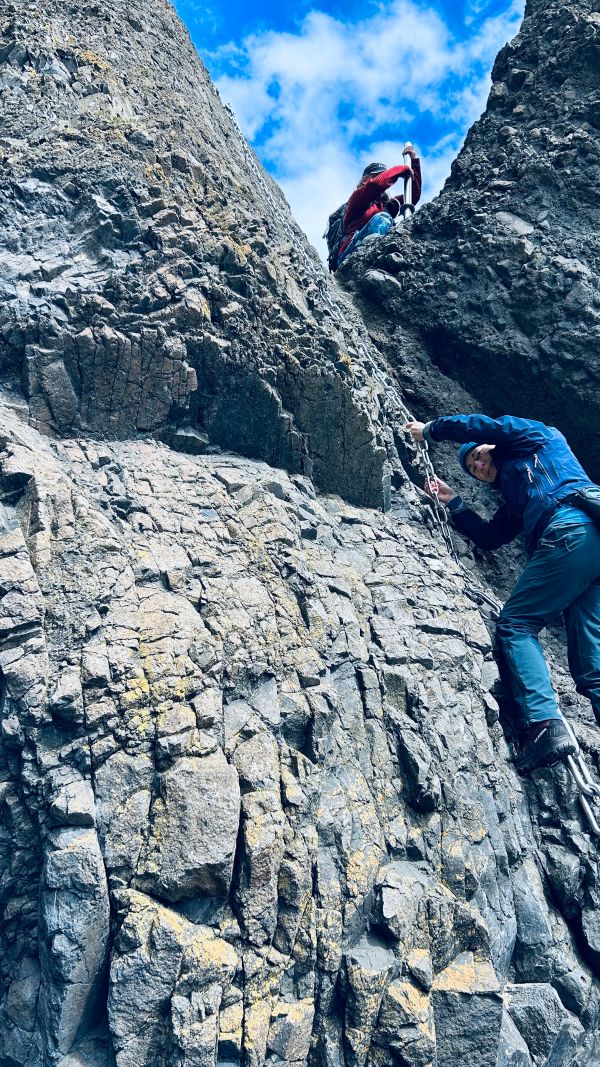
We soon reached the cliffs above the renowned – or notorious – Elie chain walk – glimpsed below from the path. This alternate route descends very steeply from the Fife Coastal Path to a warning signpost. Beyond that it proceeds across the lower part of the cliffs at Kincraig Head and shore, with steps cut into the rock and progress made possible by a series of chains. The route is only possible at lowest tide and has been the scene of many accidents – it requires some scrambling ability (gloves to help grip the chains are essential). The exact date and reason for the installation of the Elie Chain Walk is disputed, but most accounts say that a group of locals pooled resources to install the chains in the 1920s and thus made this section of the Fife coastline more navigable. There are eight robust stainless steel chains replaced in 2010.
Four of our group elected to do the chain walk but the others decided to walk up and over the cliff topss down to the beach with stunning views over to Elie and Earlsferyy. Ignore the chain walk – which is less than ideal with a pack – and continue along the clifftops.
Beach and Gaius
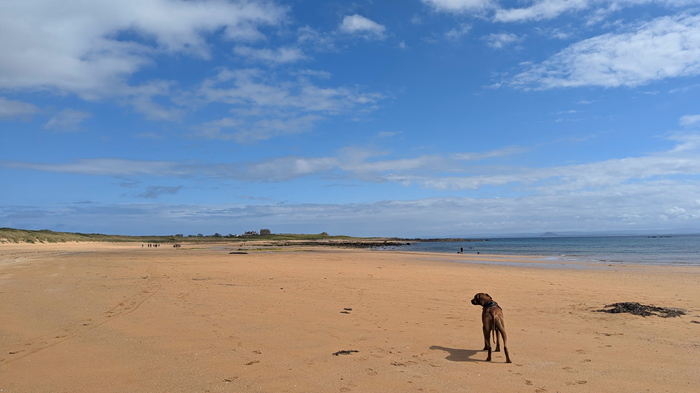
Those of us who elected to give the chain walk a miss and walked ove the top of the cliffs down to a sandy beach were rewarded with time to sit there waiting for our agile chanin walkers. Gaius the South African Ridgebak dog wit..,Lovely beach Gaius the dog South African Ridgeback dog was with us. I have to congratulate Elena on training Gaius so well as he obeys every command instantly. We walked along the beach to look at the chain walk as it would not be suitable for a dog and it was lovely to see Gaius enjoying the walk.
St Monans
We walked on to St Monans and through the town up to the high road to catch our bus in good time to go back to Lower Largo. It seemed to tour the countryside as a local bus. The weather gradually cleared during the walk.
Thanks
A very big thank you to John Paul and Eileen for organising the Fife Coastal Path walks.
Forthcoming attractions; the next stages of the Fife Coastal Path from St Monans to Kingsbarns
This section: Helen Rose Hillwalking Diary, Pat's Home Page Blog
Filed under: Helen Rose Hillwalking Diary, Pat's Home Page Blog
Prevous page or post | Next page or post
Written by : Helen Rose
 Scottish hill walker and writer for Pat's Guide to Glasgow West End.
Related Pages
- The Prime of Miss Jean Brodie – Citizens Theatre
- The Littlest Yak – Paisley Arts Centre
- Scotland’s first Stained Glass museum to be opened in lasting tribute to the works of Alf Webster
- Unveiling Nelson Mandela Statue in Glasgow
- Greg Koch at Cottiers
- Whisky Tasting at The Kelvin
- Music Night with Freedom From Torture and H4TH
- Carlton Jug Band – Avant Garde
- For Sale: Three Bedroom Flat, Broomhill Drive, Glasgow G11
- Helen Rose Outdoor Diary: Arrochar Heritage Trail.
- CRER Black History Walking Tour – Black History Month October 2026
- Black History Month October 2026
- Best Shot: How to Get Published with Sheila Wakefield
- Children’s Walk for Gaza, Glasgow Green
- Soul Jazz Sunday September Weekend 2026
- Glasgow Americana: Dar Williams & Heather Maloney at Cottiers
- Niall Connolly and The Album Club at The Glad Cafe review Pat Byrne
- Carmunnock Village Glasgow Doors Open Days 2026
- Line Dancing In St Mungo Square
- Queen At Sea at GFT