Greenock and Gourock. November 2026
Helen Rose Outdoors
Recently, Glasgow Ramblers https://www.glasgowramblers.org.uk/ organised a walk from Greenock to Gourock led by Ian who lives locally and has a huge knowledge of the area particularly in relation to the history. I am pleased that the Ramblers and their leaders welcome visually impaired people on walks and walkers offer to help with guiding. Terry was on the walk and he has no vision but is a strong walker and listened very intently to Ian talking at the various historical places of interest and giving a description of the landscape and buildings.
Greenock
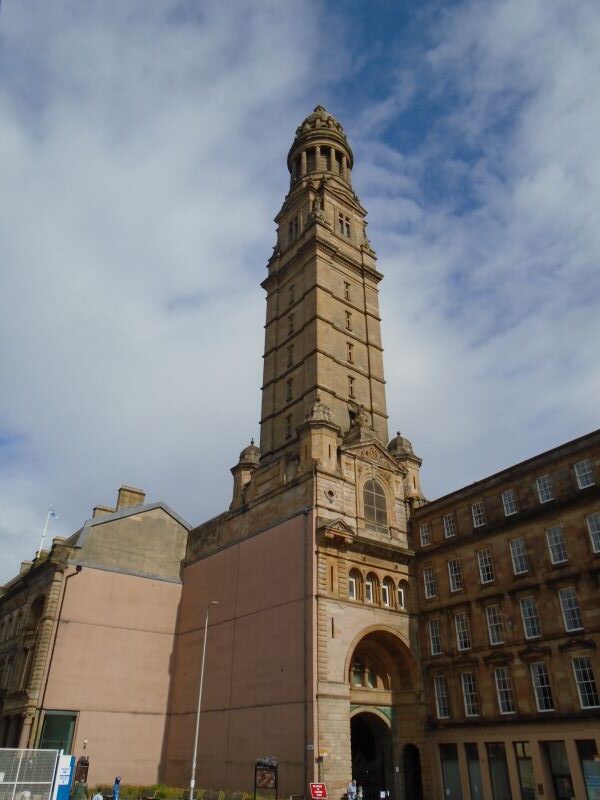
Greenock is a town in Inverclyde, Scotland, located in the west central Lowlands. The town is the administrative centre of Inverclyde Council. It is a former burgh within the historic county of Renfrewshire, and forms part of a contiguous urban area with Gourock to the west and Port Glasgow to the east It is within easy reach of Glasgow by train. Ian met us off the train and our first stop was at Greenock Town Hall where a corner of the building is missing due to World War 2 damage when this section was a shop. The Town Hall is located on the Piazza which has an impressive fountain in the centre.
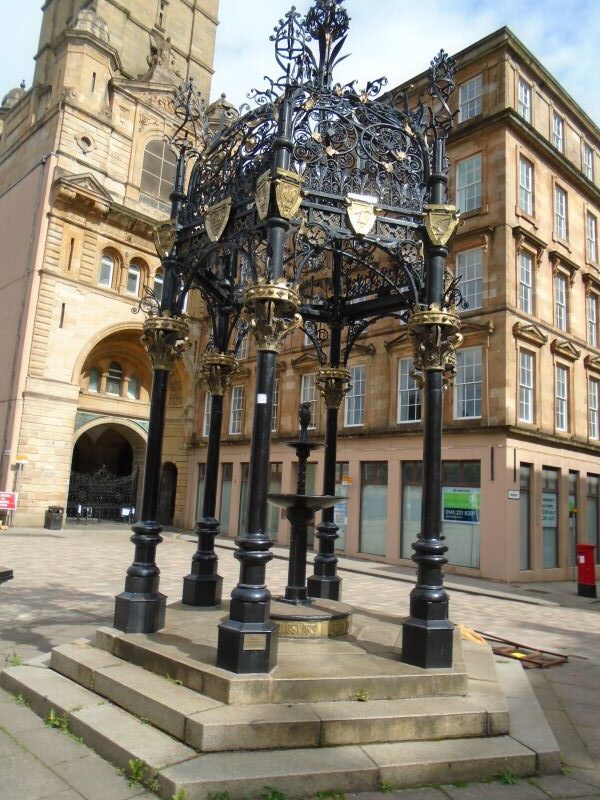
The fountain was gifted by Provost Abram Lyle in 1880 who was a successful business.an transporting sugar from the West Indies and later purchasing the Glebe Sugar Refinery’
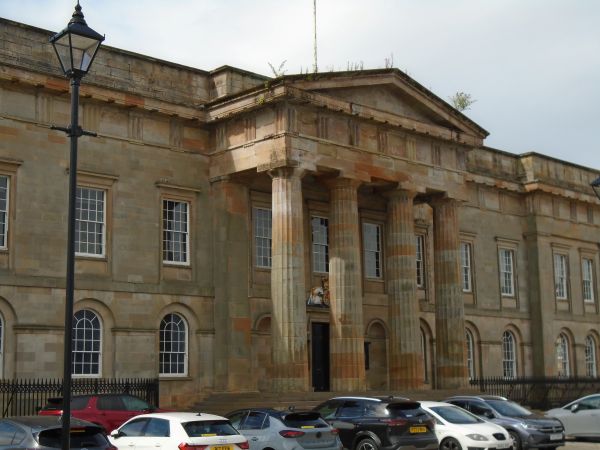
There are many fine buildings on the Square and sculptures depicting Greenock’s history as it grew from a fishing village to a major port trading with the Americas. The Art gallery is Greek styled with Doric Columns.
James Watt
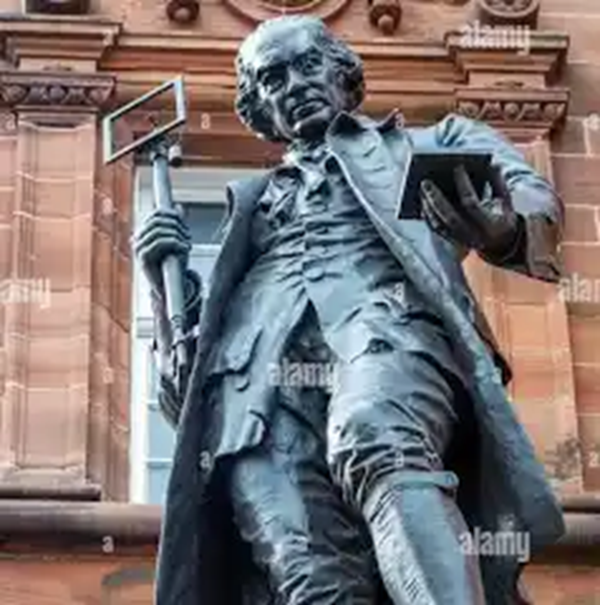
In the adjacent street, there is a statue to James Watt who was Greenock’s most famous son and developed and improved the steam engine fundamental to the world’s first industrial revolution. He developed the term horsepower in the late 18th century later known as watts for electrical equipment.
Fire Museum
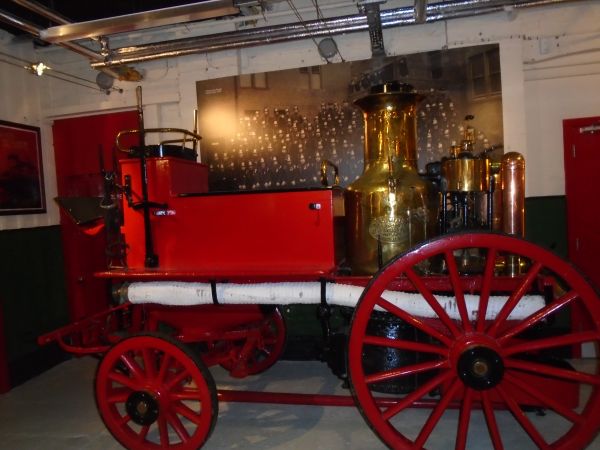
At the rear of the Town Hall is the Scottish Fire and Rescue Museum which is run by volunteers and has limited opening. We were lucky it was open for us to visit as there was a Cruise Ship in the harbour. It is the jewel of Greenock and the tour was fascinating. Restored to it’s former glory, it is on the site of the former Greenock Fire Station and well worth a visit. https://sfbheritagetrust.org/scottish-fire-and-rescue-heritage-museum-greenock/
Harbour
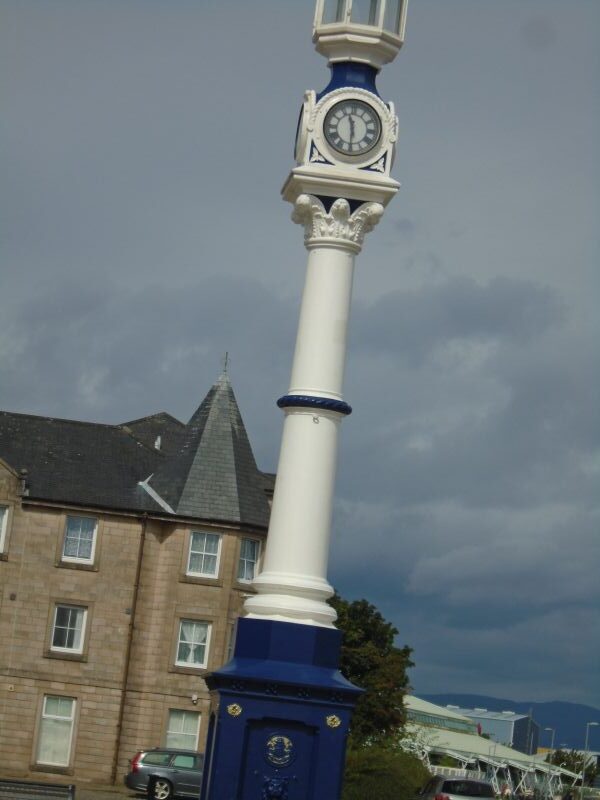
We walked along the Esplanade of the Firth of Clyde to the Greenock Ocean Terminal where the cruise ships berth. There is impressive Beacon Tower on the harbour to greet visitors. It incorporates a clock, weather vane, bell, fog light, postbox and water fountain designed by local marine artist William Clark and built at the nearby Eagle Foundry in 1868.
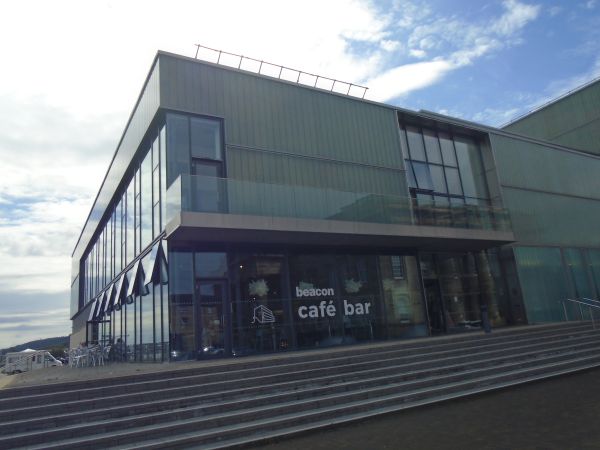
The Beacon Arts Centre opened its doors in 2013, providing a new home for the Greenock Arts Guild founded in 1946 and with an evolving future. The new iconic waterfront venue is a key cultural component of the regeneration of the former industrial land, maintaining and extending the cultural life in Greenock by means of a new, contemporary and accessible venue for the whole community.
Lyle Hill
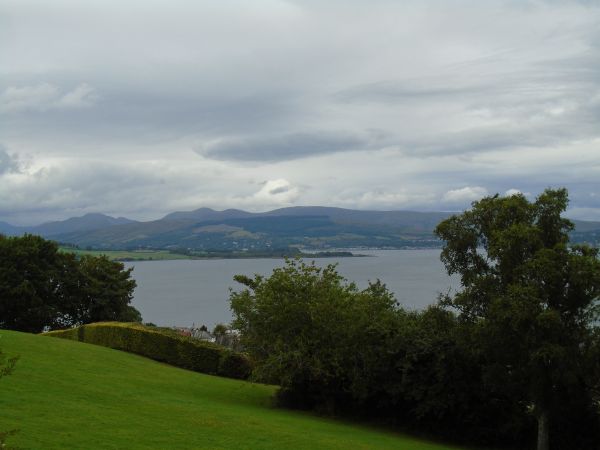
We walked past many fine houses to Lyle Hill to have lunch looking out over the estuary to Dunoon. It was a fine day with splendid views. The park is named after Abram Lyle mentioned earlier as he came from Greenock. He is best known to this day as Tate and Lyle.
In 1881, Lyle opened a sugar refinery in London and began packing Lyle’s Golden Syrup in tins. In 1897, Henry Tate who already owned sugar refineries, bequeathed his collection to what is now known as Tate Britain Gallery and Tate Modern in London. In 1921, Tate and Lyle merged to produce half of the world’s sugar at the time. It is now owned by an American Company.
French Cross.
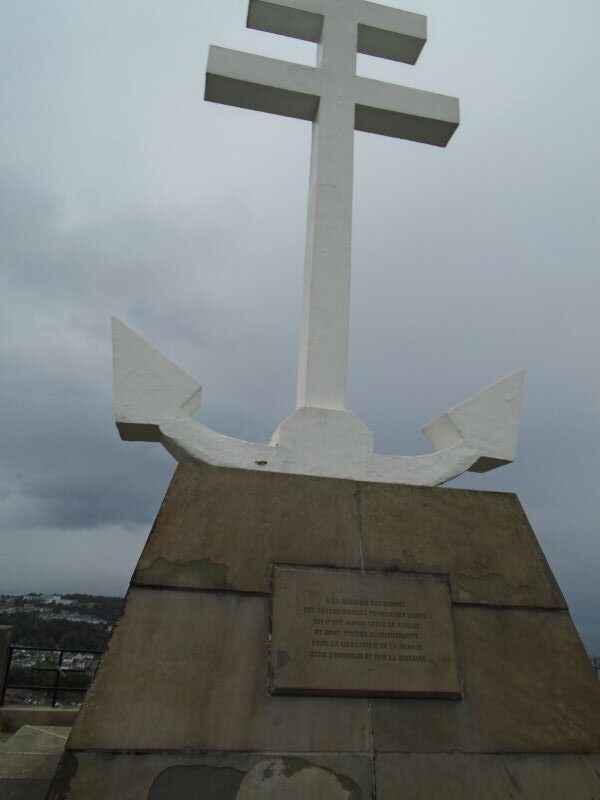
The walk continued towards Gourock but on the way down Lyle Hill to Craig’s Hill we passed a Free French Memorial to the Free French Naval Forces who lost their lives in World War 2. The memorial is in the shape of a Cross of Lorraine which is the symbol of the Free French and combined with an anchor. During the war, there was a large Free French Naval Forces base located at Greenock.
Gourock House
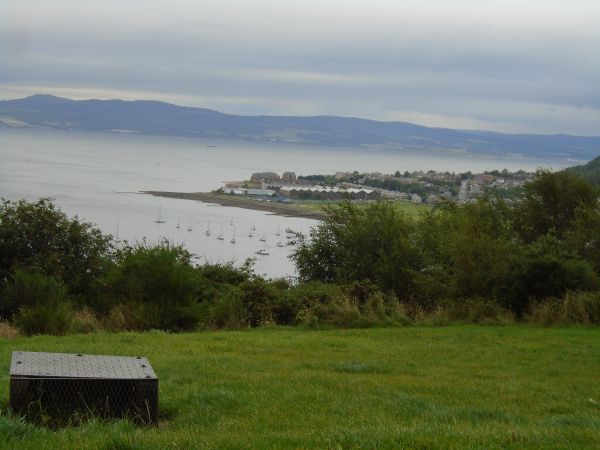
In Gourock, we came to the site of the demolished Gourock House which is now Gourock Park. Built in the first half of the 1700s near the site of an older castle, the estate and barony were purchased by Duncan Darroch in 1784. The mansion served as a venue for social gatherings, garden parties, dances and later served as an Air Raid Precautions ARP during WW2. The Town Council purchased the house and grounds in 1923. After falling in to disrepair and becoming dangerous, the building was demolished in 1947. Darroch was a former merchant who made his fortune in Jamaica. Unfortunately, this fortune was connected to the Slave Trade. The wider area maintains a deep historical tie to the Transatlantic Slave Trade, a legacy that became the subject of intense community debate and local government action.
Tower Hill
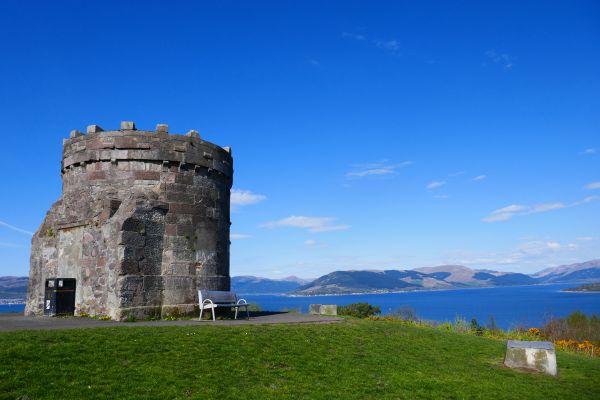
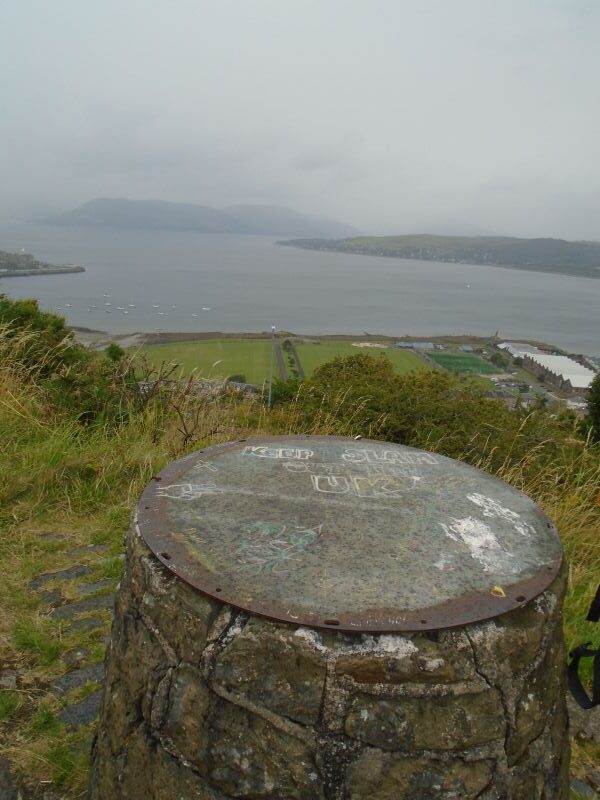
Tower Hill was previously known as Drumshantie Hill and rises to 301 feet above Gourock with great views over the Firth of Clyde The Tower which was built in 1847 gives the hill it’s name. There was a copper mine and whinstone quarry on the side slope of the hill but there is no evidence of them now. After leaving the park we walked along the esplanade for a refreshing drink in a local pub before catching the train back to Glasgow.
Many thanks to Ian for organising the walk and providing such an interesting commentary along the way.
Coming Attractions: Tentsmuir and the Tay to complete the Fife Coastal Path. Enchanted Forest.
This section: Helen Rose Hillwalking Diary
Filed under: Helen Rose Hillwalking Diary
Written by : Helen Rose
 Scottish hill walker and writer for Pat's Guide to Glasgow West End.
Related Pages
- Greenock and Gourock. November 2026
- Helen Rose Outdoor Diary: Arrochar Heritage Trail.
- Helen Rose Outdoor Diary: Falkland.
- Helen Rose’s Outdoor Diary: St Monans to Kingsbarns.
- Helen Rose Outdoor Diary: Elie Chain Walk.
- Helen Rose Outdoor Diary: Aviemore Again.
- Helen Rose Outdoor Diary, Fairlie
- Helen Rose Outdoor Diary: Cairneyhill to North Queensferry
- Helen Rose Outdoor Diary: Busby to Eaglesham
- Helen Rose’s Outdoor Diary: Roman Barr Hill and Croy Hill.
- Ayrshire Coastal Path. Final Sections. November 2025
- Helen Rose’s Outdoor Diary: Glasgow Cathedral and Necropolis
- Helen Rose’s Outdoor Diary: Royal Edinburgh Military Tattoo
- Helen Rose’s Outdoor Diary, Alnmouth, Northumberland
- Helen Rose’s Outdoor Diary: Braemar
- Helen Rose Outdoor Diary: Robert Burns Country
- Helen Rose’s Outdoor Diary: Cademuir, Peebles.
- Aviemore – Helen Rose Outdoors
- Helen Rose’s Outdoor Diary: El Rompido Part 2.
- Helen Rose’s Outdoor Diary, El Rompido Part 1.