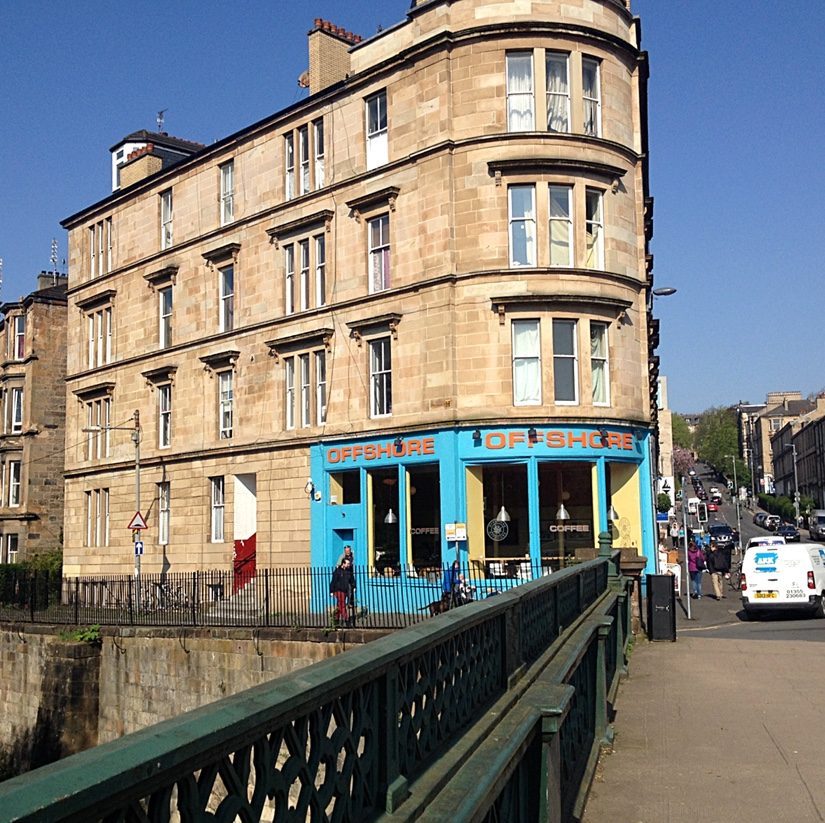
Patrick McColgan – Old Kilpatrick, Football Scout Bethlehem Steel F.C.
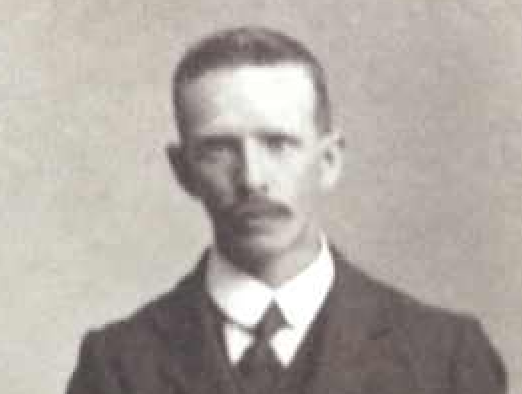
Patrick McColgan (1878–1939) was my grandfather – the second oldest son of William McColgan and Catherine Meehan, originally from Co. Donegal, Ireland, they lived in Old Kilpatrick, West Dunbartonshire.
Patrick worked as an assembly line straightener in Singers Sewing Machine in Clydebank and was also a football scout. My mother and my aunts and my great Uncle Rodger, Patrick’s brother, often spoke of the football players he brought to their house. They also told the story of how Patrick went to America to help build up a football team in Philadelphia, Pennsylvania and how he had brought players over from Scotland and England. This was just part of our family’s folklore and like most of us, whose parents and older members of the family have died, I wish I had been more inquisitive regarding this tale.
However, a couple of years ago my cousin Desmond McColgan’s daughter Claire got in touch with me. Her parents had died and she was clearing out the family home and said she had something for me. It turned out this was a medal belonging to my grandfather, that had been given to him when Bethlehem Steel Football Club were national champions of the USA Football Association in 1925 – 1926.
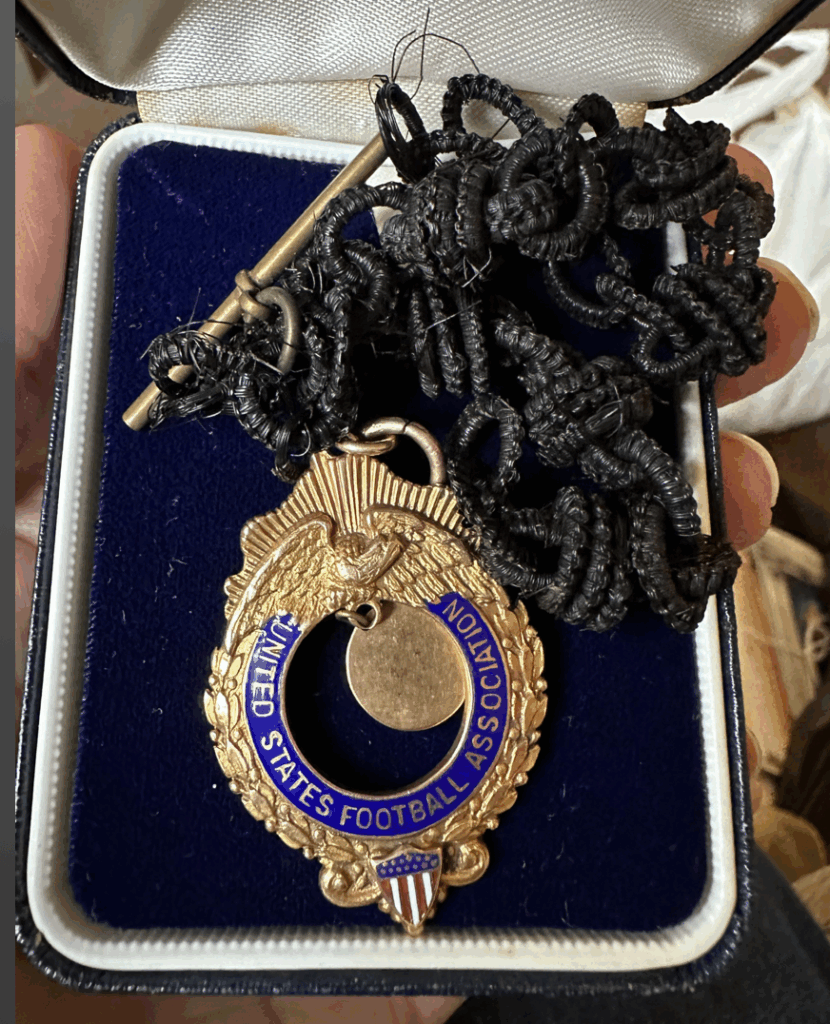
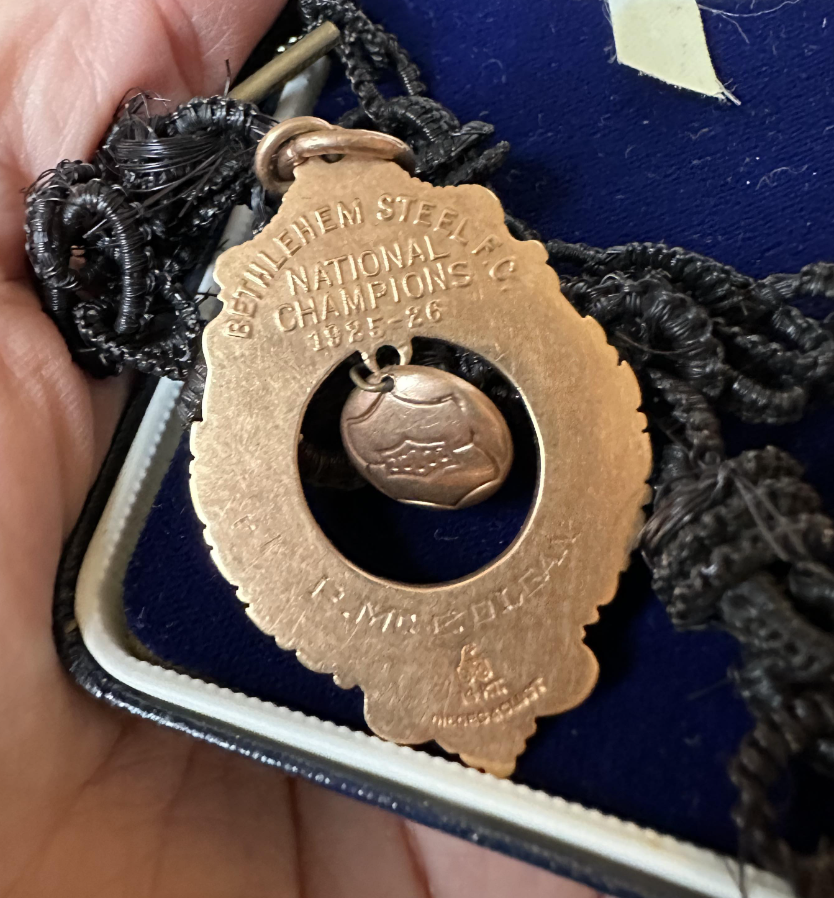
(You can see Patrick McColgan’s name engraved on the medal)
This gift prompted me to look more into our family’s history.
Patrick sailed to New York from Liverpool, 1924 on The Athenia.
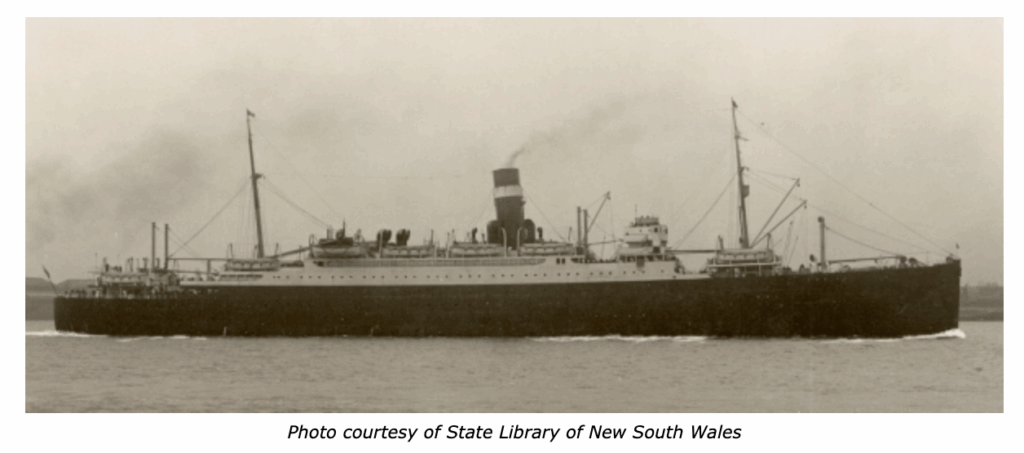
On 15 March, 1924. Patrick sailed from Liverpool to New York: Aboard The Athenia.
(The Athenia was a Glasgow-registered passenger liner built by Fairfield Shipbuilding Govan in 192. It became the first British ship sunk by Germany in World War II. Torpedoed by a German submarine on September 3, 1939— about 250 miles off the Irish coast – just hours after war was declared. Most of the 315 crew members and 1103 passengers abandoned the ship in 26 lifeboats. 19 crew members and 93 passengers (28 of them US citizens) were lost. The Norwegian tanker Knute Nelson rescued roughly 450 survivors and transported them to the Port of Galway. )
Bethlehem Steel Football Club
Patrick was heading to Bethlehem Steel Football Club to work as a scout. When I started to look for information about the club I was astonished to find masses of information about what was one of America’s most prestigious early football clubs.
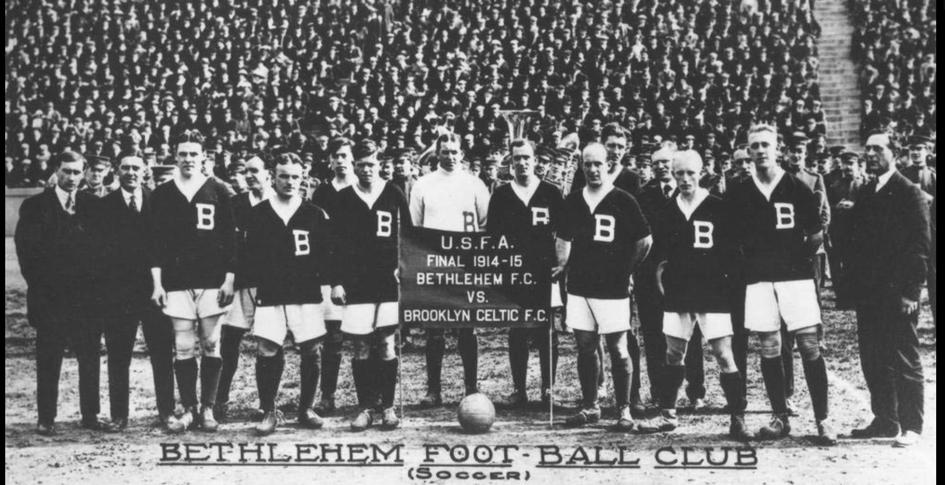
Bethlehem Steel Football Club 1914 – 1915
The football club was established in 1907, supported by Bethlehem Steel Corporation An American company with its headquarters in Bethlehem, Philadelphia, it was one of the world’s largest steel producing and shipbuilding companies. Many immigrants were employed by the company including large numbers from Scotland and England, they brought their culture with them and this included football, which became part of regular sporting activities in the area. This led to the birth of Bethlehem Steel, initially in 1907 as an amateur club. Steel magnate Charles Schwab invested in the club and transformed it into a professional club in 1914, players from within the company were recruited and professional players imported from Scotland and England. The club went from strength to strength to become one of America’s most prestigious football clubs.
Bethlehem Steel wasn’t just a titan of industry but ‘a sports superpower, too’, with its ‘specially recruited soccer team, the Bethlehem Steel Soccer Club, was a colossus of clout’.Steve Novak (LeighValleyLive.com)
Bethlehem Steel was ‘the first superteam in American Soccer – they were the New York Yankees’. (Forged in Steel – the roots of American Soccer. YouTube Documentary)
The Gobe newspaper reported in September, 1925:
‘the front line includes Goldie, Rollo, Robertson, Stark, Granger, Forrest, Purvis and Cameron, probably the finest and best array of forwards in the American Soccer League..” (The Globe, 15 Sept 1925) – Every one was a Scots apart from Robertson.
Players
The team had some brilliant and interesting players some with local connections.
Wattie and Alex Jackson, from Renton both signed to Bethlehem Steel in 1923. Wattie had played for Kilmarnock and his younger brother with Dumbarton. Alex was a particular star, specialising in free kicks and an excellent dribbler – “perhaps the World’s best player of the second half of the 1920s.” In 1925, the Jackson’s returned to Scotland and Aberdeen without somehow letting the club know, although Wattie signed to Bethlehem Steel again in 1927.
The Globe, April, 1924 Reported that Bethlehem Steel was:
“the best that has ever been seen in St. Louis” ” Fullback Ferguson, the two Jacksons and Maxwell were the outstanding stars”
Big Dan” McNiven, ex. of Partick Thistle, was the American league’s top scorer in 1922 – 1923 – however, he ran off with Wiilliam Sheridan the manager’s wife, married her and became involved in a case of bigamy. William Sheridan came from Dumbarton.
Their most famous and most remarkable player was Archie Stark. –
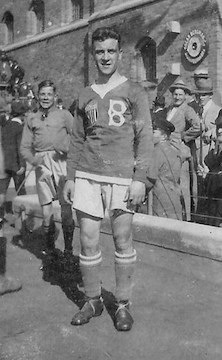
Archie Stark (njs.com)
He joined Bethlehem Steel in 1923 and became a major asset. Another Scot, born in Glasgow, he had moved to America with his family as a thirteen year old. In 1924/1925 he became the world record holder of the highest season scoring record of 67 goals. He was to hold this record for 87 years until beaten by Lionel Messi who scored 72 goals in a season for Barcelona in 2012. Archie Stark still holds the world record for most hat tricks (8) scored in a season and the most prolific goalscorer in American Football History.
I would love to know what players Patrick McColgan was responsible for bringing to Bethlehem Steel. Looking at signing dates of some Scottish players it could have included:
Johnny Rollo, a Glaswegian, signed to Bethlehem Steel in September, 1924, He played with the team until 1930. In his earlier career he played with St Rochs, Rangers and St Johnstone.
Ronald Cameron played with Dumbarton before moving to Bethlehem Steel in 1924
James Forrest – Scottish – Played for Clyde and played for Scotland against England in 1921. Signed to Bethlehem Steel in 1925.
The McColgans
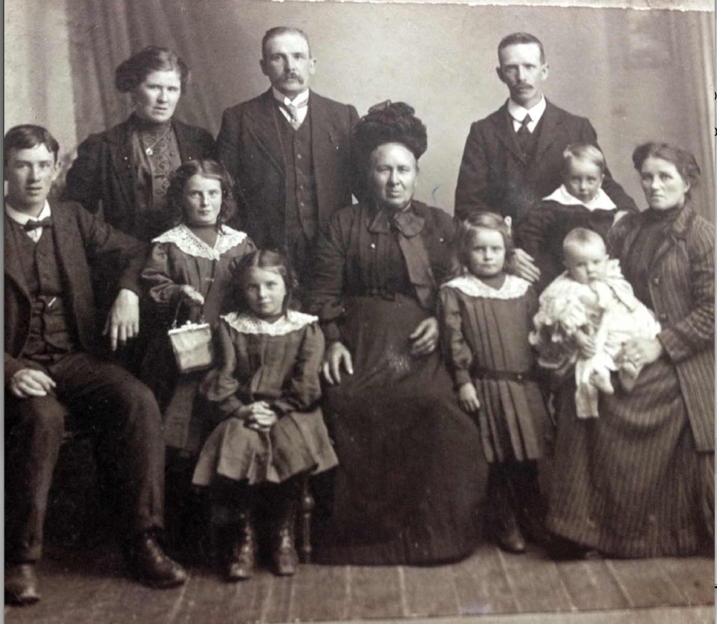
Patrick McColgan and Family circa 1916. (Front row from Left. Jimmy McColgan, Lizzie, Winnie, Grandmother Catherine Mulholland, Katie, Willie, Baby Denis and Mother Catherine Meehan. ) (Back Row. Possibly sister Mary and husband and Patrick McColgan) Mary and Margaret, our mother, were not yet born)
I’ve thought a lot about Patrick and the McColgan family. In particular I dwelt on how it was possible for him to leave his family in Old Kilpatrick to go and work in America. My mother, Margaret – the youngest of his seven children – would only have been six and there were three other children under ten, Willie, Denis and Mary. Patrick was a widower, his wife, Catherine Meehan, our grandmother, had died in 1918, when our mum was just an infant. Lizzie, the oldest sister, would have been 19, Katie 17 and Winnie 15 – they, no doubt, would have been kept busy taking care of their younger siblings when their father was away in America.
Looking into the family history there was clearly a very large connection of McColgans. (I discovered Patrick had a half-sister Fanny, that I didn’t know about, she lived in Old Kilpatrick until 1951) – and his mother, my great grandmother Catherine Mulholland, lived until 1933. Patrick’s brothers Rodger, Daniel, Felix and Jimmy all lived in Old Kilpatrick, Tommy in Glasgow. His sisters Sarah Jane and Mary also lived in the village with their husbands and families (he Cairns and Kemps) – so there was no shortage of McColgan adults around.
Our mum and dad, Danny Young, had seven children (Drew, me – Pat, called after our grandfather, John, Catherine – called after our grandmother, Danny, Roger and Liam) and we also grew up in Old Kilpatrick surrounded by a wide network of McColgan relatives.
My son John still lives in the family home.
Pat Byrne, May, 2026
This section: Pat's Home Page Blog
Filed under: Pat's Home Page Blog
Prevous page or post | Next page or post
Written by : Pat Byrne

Related Pages
- Pressure at GFT
- Mackenzies: A Dog’s Breakfast Album Release LNFG
- Social Dancing Maryhill Burgh Halls
- Glass and Concrete Project Launch
- Siskin Green – Living in the Echo at Cottiers
- Take 2: Horton Hears A Hoo at GFT
- Ando Glaso Roma Fest – Symposium University of Glasgow
- ‘Premature’: First clip released from brand new Scottish rom-com
- Wully Davidson: Climate Change – Glacial Lake Outflow Floods & Glacier Collapse Floods
- Yorkhill Gala Day 2026
- Sea Shanty Workshop
- Hillhead Beer and Food Festival
- Govan Book Festival – In Conversation with Alan Dimmick
- Brutal Glasgow Trail
- Every Picture Tells A Story – Exhibition Maryhill Burgh Halls
- Doors Open Days: Old Kilpatrick Graveyard Walk and Talk
- Drawing the Past: Still Life with Singer Sewing Machines
- Launch of Books by Lesley Benzie and Graham Fulton
- Ann MacKinnon, Scottish Writers Centre
- West End Bus Fest