
Glasgow West End: Interesting and unusual facts
New additions to Unusual West End Facts:
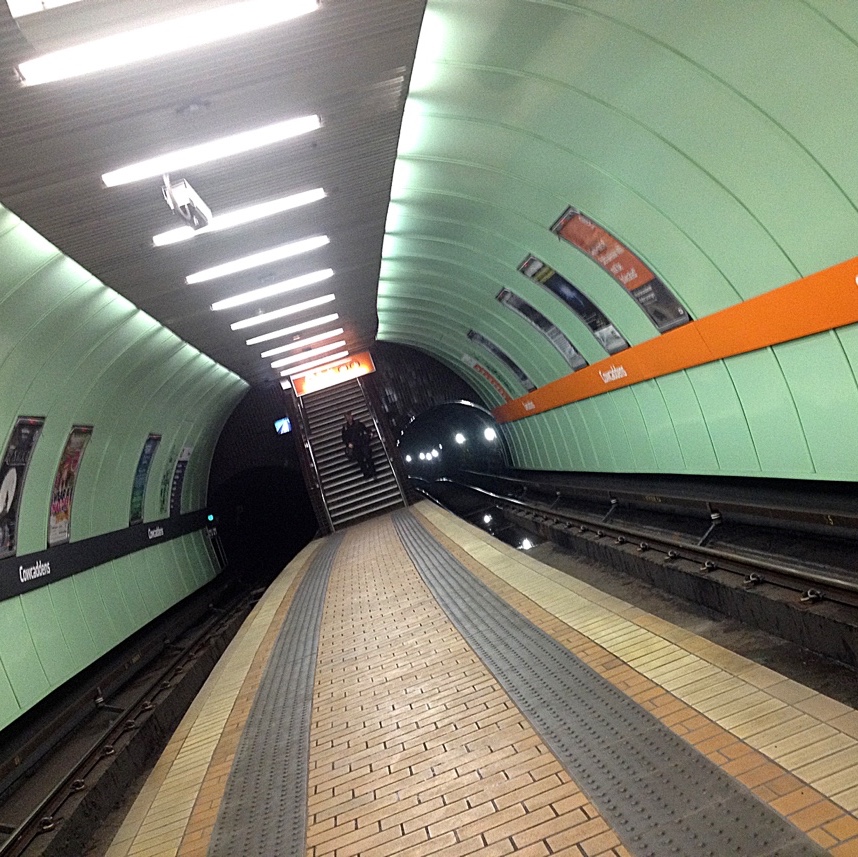
Glasgow Tube Station
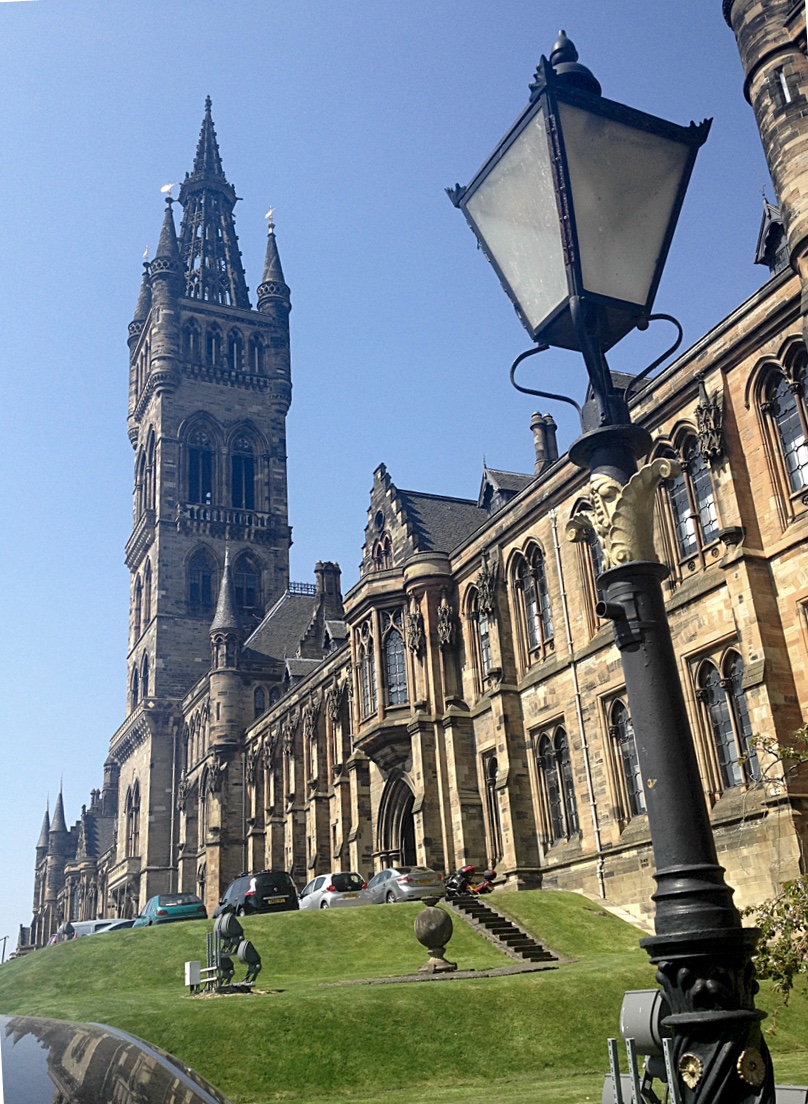
Glasgow University
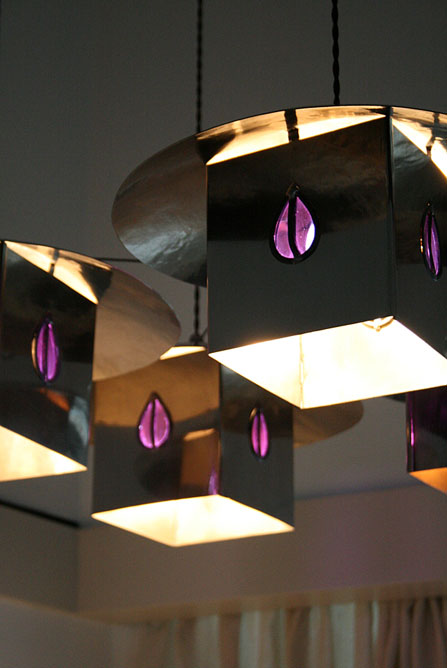
Rennie Mackintosh Lights
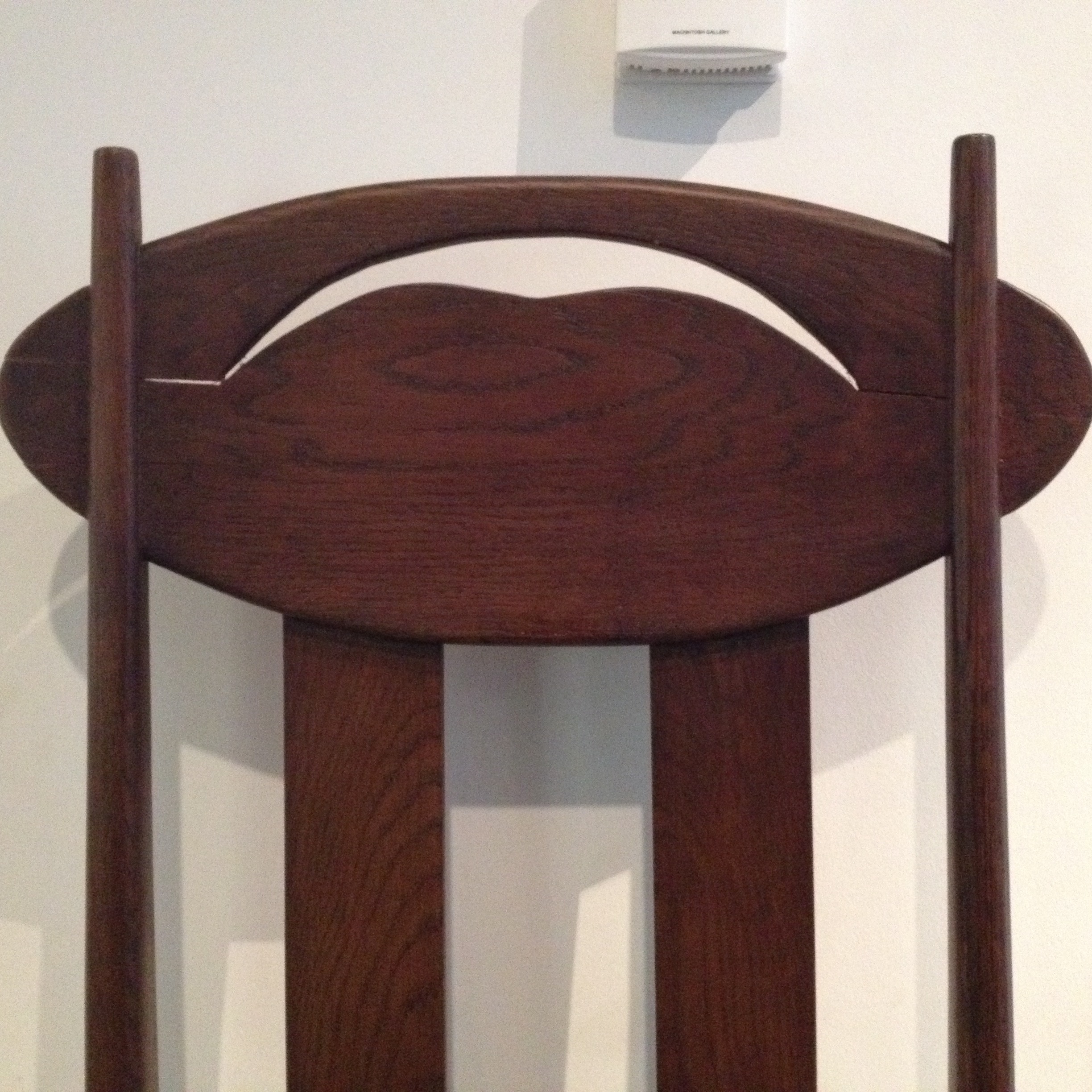
Rennie Mackintosh Chair
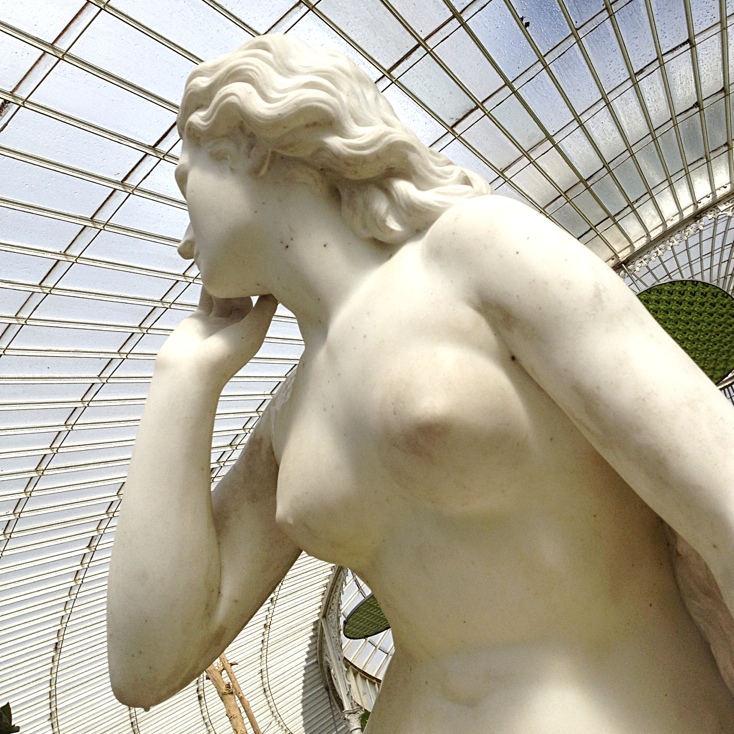
Kibble Palace Statue
The Sir Walter Scott connection to Hillhead
“In 1702 the lands of Hillhead were part of great Blythswood Estates. They had been purchased about 1680 by Robert Campbell of Northwoodside, Dean of Guild in Glasgow, second son of Colin Campbell the first Blythswood. Robert’s daughter Janet inherited Hillhead at his death in 1694. On her marriage to Thomas Haliburton, advocate, of Dryburgh Abbey, in 1702 she sold Hillhead and Byres of Partick to Andrew Gibson the tenant and removed to her husband’s estates in Berwickshire where, in the course of time, she became great-grandmother of Sir Walter Scott by her daughter Barbara marrying Robert Scott.” This information is from the historical note in ‘A Hillhead Album’ by Henry Broughham Morton.
A.E. Pickard – The last of the great eccentrics
Information about A.E. Pickard from West End school girl Kirsten O’Neill. I think you will enjoy her view of this famous Glasgow eccentric A.E. Pickard Also thanks to those of you who have added your comments and memories of this famous West End eccentric.
Some local history from artist and writer Edward Chisnall: Glasgow West End: Volunteers and All That.
The Full List
- The first official international football match was played at the West of Scotland Cricket Club in Partick in 1872. It was between Scotland and England.
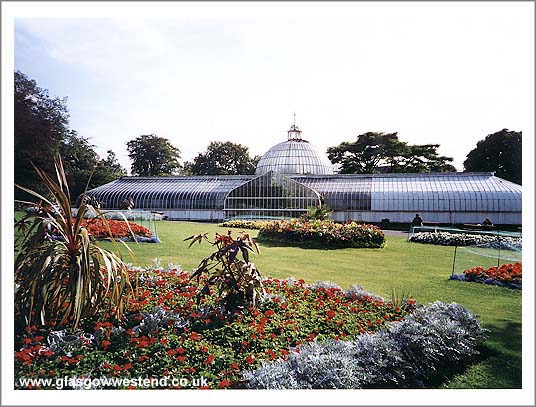
- The splendid and spectacularly domed glasshouse the Kibble Palace‘ (1873) located in the Botanic Gardens (1842) was originally the conservatory of John Kibble – a Victorian eccentric. In 1873 he made an agreement with the Royal Botanic Institution to have it transferred to the Botanic Gardens. Part of the agreement was that he could retain the use of the glasshouse for concerts and entertainment. For over 20 years it was the social focus of the West End gentry. (Great Western Road 0141 334 2422)
- Partick has been in existence since at least 1136 at various times being known as Perdeyc, Perthic, Perthec and Partic. Until the mid-1880s Partick had a drummer who would beat his drum every day at 5am, to get everyone up for work, and at 9pm to signify that it was time to go back to bed. ( From ‘”The Story of Partick Vol 1″‘ Volume 1 by Bill Spalding)
- There are only five Clyde built sailing-ships left afloat in the world – the SV ‘Glenlee’ is one of them and can be seen at close range at the Clyde Maritime Centre (Stobcross Quay, 100 Stobcross Road, Glasgow G3 8QQ Tel: 0141 339 0631 web: http://www.glenlee.co.uk ).
- The largest collection of Clyde ship models in the world is housed in the Museum of Transport (Riverside Museum, 100 Pointhouse Place, Glasgow, G3 8RS).
- The world’s last sea-going paddle-steamer, the ‘Waverley’ was built on the banks of the River Kelvin by A & J Inglis in 1947. This was a replacement for an earlier Waverley, which had been sunk at Dunkirk. The ‘new’ Waverley is still in use – you can take a trip ‘doon the watter’ throughout the summer.
- The first weekly service to North America sailed from Yorkhill Quay.
- There is a widely held belief that Glasgow’s Art Gallery and Museum was built back-to-front in anticipation of the main road being moved to what is now the back of the Gallery. I’ve recently discovered that, although the myth is untrue, the front of the building actually points away from the main road towards the River Kelvin and Glasgow University, whilst the back points to Dumbarton Road – the main thoroughfare.
- In 1807 the Hunterian Art Gallery and Museum became the first public museum in Scotland.
- Charles Rennie Mackintosh was of course a Westender – staying at 78 Southpark Avenue. Alexander Greek Thomson built many famous buildings in the West End; notably Great Western Terrace ( Great Western Road ) which is easily the ‘grandest terrace in Glasgow’, also Westbourne Terrace, Northpark Terrace and part of Oakfield Avenue, where I used to live in a basement flat. (“Amazon.co.uk – Charles Rennie Mackintosh”)
- Both Glasgow’s most famous architects Charles Rennie Mackintosh and Alexander ‘Greek’ Thomson came from very large families – 11 and 20 children respectively. I suppose thats why they were fond of building such big houses.
- Alexander ‘Greek’ Thomson never visited Greece – in fact he was not a noted traveller. He did, however, found the ‘Thomson Travel Scholarship’ that enabled Charles Rennie Mackintosh to make educational visits to Venice, Florence and Rome.
- You may have heard that Charles Rennie Mackintosh was married to Margaret MacDonald but did you know that he had previously been the long time partner of Jessie Keppie the youngest sister of John Keppie (also a Westender and junior partner in Honeyman and Keppie where Mackintosh worked). Jessie and Margaret were part of the same group of art students at Glasgow School of Art. Apparently Jessie never got over her ‘disappointment’ – she never married. ( From ‘The Life and Works of Rennie Mackintosh’ by Nathaniel Harris)
- You will find the world’s largest collection of the work of Charles Rennie Mackintosh in the Hunterian Museum and Art Gallery. (University Avenue – 0141 330 4221)
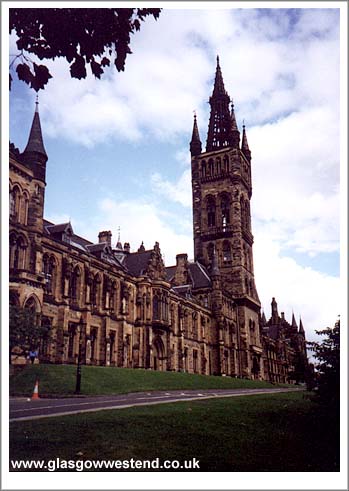
- The University of Glasgow’s Building is the second largest ‘Gothic Revival’ building in Britain (built 1867). When the architect Gilbert Scott was chosen to design it there was no competition. Alexander Thomson was displeased and showed his annoyance and disapproval by delivering a lecture damning its Gothic style and pointing to the fact that no Scottish architects were able to compete for the design.
- The Glasgow underground or ‘tube’, which has stations in the West End at Kelvinbridge, Hillhead, Kelvin Hall and Partick was called the ‘Clockwork Orange’ by locals because ( I imagine ) of the colour of the carriages. Glasgow is the only city in Scotland which has an underground train service.
- The original underground system was cable operated and is the oldest underground system in the world. Carriages from the original underground can be found in theMuseum of Transport (Riverside Museum, 100 Pointhouse Place, Glasgow, G3 8RS).
- The Mitchell Library is Europe’s largest public reference library with more than a million volumes. It also houses the world’s largest Robert Burns Collection. Stephen Mitchell the libraries founder died in 1874 the same year the library came into existence. ( North Street 0141 287 2931)
- People who live in the West End of Glasgow are reputedly called ‘Wendys’ (West End Trendies) by those who live outwith the area.
- The West End is made up of a group of hills which were formed by the action of ice flows during the last ice age. Glasgow University sits on top of one of them: Gilmorehill.
- The Western Baths – a private club – located in Cranworth Street is famed for the trapeze which spans the pool. It is also known for its occasional classical concerts held in the pool – when it has been emptied of water of course. Until the 1930 it had the biggest indoor pool in Scotland. Visitor memberships are available.
- A statue of William Thomson, Lord Kelvin was put up in 1913 and is located in Kelvingrove Park. For 53 years William Thomson (Lord Kelvin) was Professor of Natural Philisophy at Glasgow University where he did research into marine instrumentation and thermo_electricity. The Kelvin temperature scale, which identifies -273 C as Absolute Zero, is named after him. I have been told by my friend David Donald – don’t know if it’s true or not – that the first refrigerators were called Kelvinators – again named in reference to Lord Kelvin.Here are some interesting facts about Lord Kelvin ( William Thomson) sent to me by the artist and writer Edward Chisnall.
- An arm from one of the statues on the Kelvin Way Bridge, which had been detatched by the explosion of a 1914 bomb, lay in the mud of the river Kelvin until 1995 when a passer-by spotted and retrieved it. ( Thanks to ‘Sculpture in Glasgow’ by Ray McKenzie, Glasgow School of Art for this bit of information.)
- The Kibble Palace, which is now located in the Botanic Gardens, was a gift from John Kibble – having been re-located from his home in Coulport in 1873. An enthusiastic amateur photographer he produced some of the largest photographs of his time ( no such thing as enlargements in those days). The negatives of some of his photographs were so big they had to be moved around in a horse-drawn camera!
- On 24th January1914 twenty seven panes of glass from the Kibble Palace where broken by a bomb allegedly planted by militant suffragettes. A second explosion was narrowly avoided when the burning end of a lighted fuse was cut of by the night stoker. Evidence that it was the work of suffragettes included the impression of high-heeled ladies shoes in the soft ground and a lady’s black silk scarf found nearby. ( From Kibble’s Palace by Eric W Curtis)
Do you know any Interesting or unusual facts about the West End of Glasgow? Share your knowledge by clicking the button below please. Pedants, humourists and those of you with good memories are all welcome to add your comments.
Comments
Jim – just to add authority to my comments to you here is what a web search for Kelvinator – still manufactured – says. When I went to the States in the 1950s (just a boy!) peole spoke of Kelvinators the way they spoke of Hoovers…
“Kelvinator is one the world’s first manufacturers and pioneers in the refrigerator industry. In 1916 the American company became one of the first in history to produce an automatic refrigerator for the household market. Since 1994 Kelvinator has been a member of the Electrolux family. The Kelvinator name is a tribute to the British scientist who pioneered the principles of refrigeration in 1850. He was the famous physicist William Thomson, founder of the temperature scale, who was knighted Lord Kelvin for his noteworthy scientific accomplishments. It is now more than 85 years since Kelvinator began to forge its reputation of quality. Today Kelvinator is the choice for families who value many good years of service and seeks certainty that they make a sensible choice. As an owner you can be sure that Kelvinator provides functionality and performance over time. Kelvinator household appliances, such as refrigerators, freezers and air conditioners, can be found across hundreds of markets with millions of satisfied customers in many countries.” —David Donald ( d dot donald at GCal dot ac dot uk ) from Scotland on 26.7.2003; 14:10:04 Uhr
The Glasgow underground railway is younger than both the Budapest and London systems. The first Budapest line was also opened in 1896. The London Underground dates from 1863, 1870 or 1885, depending who you listen to. Jonathan ( jonathan at xoddam dot net ) from Australia but staying in Paisley on 7.2.2002; 21:24:33 Uhr
The original glasgow and west of scotland college of domestic science for young ladies was the building which is now the BBC in queen margaret drive. the song about the ‘west end park’ might possibly refer to the BBC building and not to the present college. also years ago as part of the diploma in domestic science students had to ‘live in’ and ‘housekeep’ at the college for a weekend (in the days when people stayed at home until they got married.) Cheerio again, Rena —Christina Byrne ( c dot byrne at dial dot pipex dot com ) from Scotland on 13.2.2001; 23:08:37 Uhr
Hello Pat, Having been brought up in Otago Street I recall seeing A.E. Pickard at the time of the Coronation of Queen Elizabeth. A street party was held and in addition an evening party was alos held at the Highlander’s Institute. Pickard drove up in his Rolls Royce with his chauffeur in the passenger’s seat – he did not have a license at this time. In order to park his car he found a space between two other cars and nosed in and gently hit the car in his front. He then realised that he should reverse which he did and gently hit the car in his rear. After a bit of a stramash he was able to pull the car into the middle of the road and go past the first car with a view to reversing his Rolls into the space. This he did scraping both cars in succession and when he got out of his car he was well pleased with himself. A major achievement! It was then noted that he was wearing a kilt of solid red, white and blue colours! Enjoyed you wee web corner! Regards Peter R. McNaughton —Petr McNaughton ( someone at host dot com ) from Canada (Montreal) on 13.2.2001; 23:07:16 Uhr
The Kelvin Hall and the Art Galleries are both in Argyle Street. Dumbarton Road now starts halfway over Partick Bridge. William Thomson (Baron Kelvin) and Alexander “Greek” Thoomson have no “p” in their names. The Glasgow Subway was the second-oldest system. West End hill are actually drumlins. Hog-back formations built on impacted clay that the retreating glaciers could not force out of the way. The statues of War and Peace ended up in the Kelvin after the landmine landed in the putting-green on March 18/19, 1941 (Clydebank Blitz). It was the sword of “War” that was exposed during the flood which altered the course of the Kelvin. The statutes had been designed by an Australian sculptor (A Montford)and paid for from the profits of the 1901 International Exhibition at Kelvingrove. The designs were shown to the public at the McLellan Galleries but WWI delayed their erection till 1926. The statues were restored and the bomb damaged bridge repaired in time for the Festival of Britain in 1951. Park Campus of Caledonian University was used as a Red Cross hospital in WWI, as a branch of Springburn Red Cross hospital (NB Loco hq and restored). The point of the quoted poem was it was in Kelvinsidese not English. The Elephant story is not confirmed. Maybe confused with a favourite elephant belonging to the Scottish Zoo in the Cowcaddens (interior still visible). Sir Roger developed must and had to be shot. It was stuffed by a taxidermist in Sauchiehall Street (whose shop windows had to be removed). Sir Roger is on display at Kelvingrove Art Gallery & Museum (the fatal bullet-hole is still visible). Sir Roger stands besides a junior elephant whose name (after a competition) is now Kelvin. The Scottish Zoo (E H Bostock) was a direct rival of A E Pickard. —Stanley K Hunter ( StanleyKHunter at compuserve dot com ) from Scotland on 13.2.2001; 23:05:26 Uhr
AE Pickard was very much in evidence when I was in my early teens. He once had a billboard in town (I think it may have been Dundas Street – someone can correct me if I’m wrong!) which advertised land at so much per sq. foot “cheaper than linoleum!” He also had a billboard at the entrance of what I took to be where he lived at the time. It was one of the big houses on the north side of Great Western Road (near the homeopathic hospital) The notice, which faced you on the way into town, said “Good Morning – Going to Work?” Not what you wanted to hear from a millionaire on a Monday morning! I think there may have been another board which you could read on the way back but I can’t remember what it said. Maybe someone else will. Definitely an eccentric…there should be more of them! —Jess Fitzgerald ( jess dot fitzgerald at which dot net ) from Scotland on 13.2.2001; 23:03:31 Uhr
Do you know that the Park campus site of Glasgow Caledonian University was used as a hospital during the first World War? Invalided soldiers were billeted there for rehabilitation. For a long time the ladies toilet had the origional doors where soldiers carved their names. This was in the early days of what used to be known as the ‘Do School’, more exactly, The Glasgow and West of Scotland College of Domestic Science and Communication incorporated. This mouthful was changed to The Queen’s College, Glasgow and at the request of Her Majesty, the title had to have a capital at The. In the usual Glasgow way this was known as Queens. The once well known song ‘the West End park’ celebrated the events where students would come done to the Do school building and shout up to the female students in residence there; what is now the staff offices in the consumer studies department. People dont call out anymore! I wonder why? The song included the lines ” Open your window, the night is beastly dark the phantoms are singing in the west end park Open your window your lover now to see….” A clear invitation to come down to the park and get frightened —Alex Gardner ( a dot p dot gardner at gcal dot ac dot uk ) from Scotland on 13.2.2001; 23:02:00 Uhr
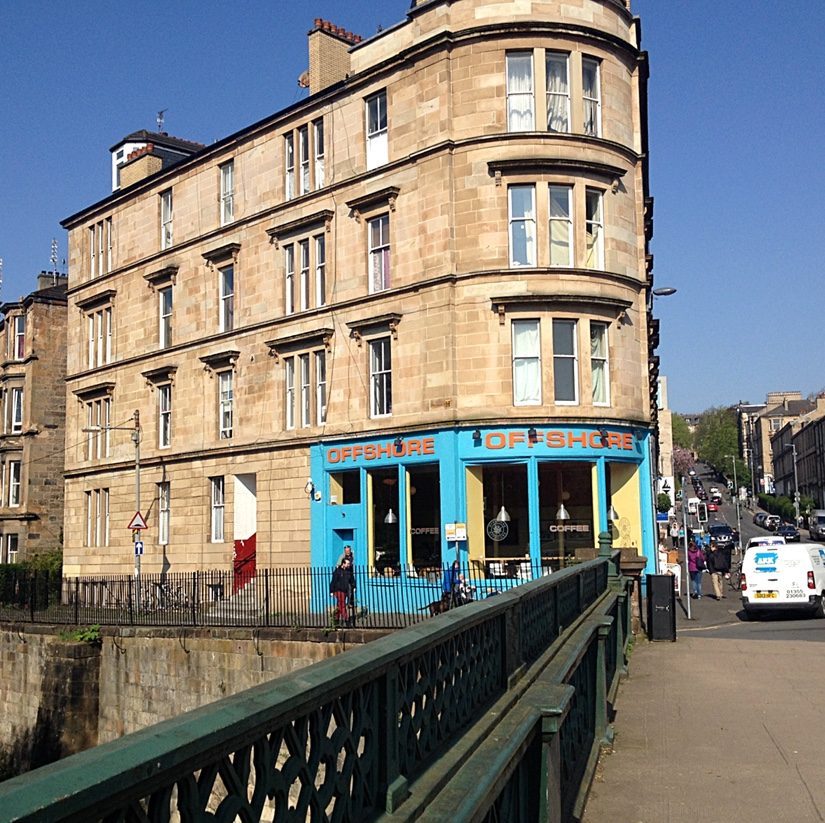
I was told a very interesting story about the West End one day when a repair man came to fix my tumble drier! Whether you believe the story he told me or not is entirely up to you – either way it’s a good wee story. During the early 1900’s the annual Circus used to proudly parade the performing animals through the streets of the West End on their journey to the Kelvin Hall where the Circus was performed. During one of these parades along Great Western Road at Kelvinbridge, a large elephant collapsed and died. As there was no lifting machinery of any type available in those early years the circus organisers had to think of what to do with this mammoth animal!!! Part of a turret of the Kelvinbridge was pulled down, and the elephant was pushed over the edge to land next to an underground tunnel. The elephant was buried and still lies there to this day – covered by flowers and greenery listning to punters from the Big Blue talking loads of pub talk – rubbish! —Jane Hunter ( jane dot hunter at dtn dot ntl dot com ) from Scotland on 13.2.2001; 23:00:43 Uhr
Does anyyone remember the Poltergeist in Ewan Johnsons house..Wow that was ever so creepy..was 1980s..fiona
Charles Rennie Mackintosh was actually born in Parson St Townhead yvonne
Open your window, the night is beastly dark the phantoms are singing in the west end park Open your window your lover now to see Does anyone have the complete wirds for this song? Moira Currie
I lived in Dalmally Street until I was nine and went to Dunard Street School. The last teacher I remember was Alice Dale who was Stanley Baxter?s sister, the Baxter family lived in Wilton Street. I believe Alice Dale now lives in Australia and in fact still acts in an Australian television programme. My grandmother stayed in South Woodside Road and we walked down there every Sunday, then on to the Art Galleries. My father told me that as a boy growing up in South Woodside Road before the war they played football in the street, beside the ?coal ree? as he called it. One of his pals was a boy call Bernard Perceccini who went on to become a sports journalist with the Glasgow Evening Citizen, his nom de plume was Big Ben. If the police came along and ?checked? them for playing football the boys would send Ben to approach the police, the policeman would get out out his notepad and pencil, about to write down this boy?s name, when the reply was Perceccini, he would just cough and say on your way boys, no more football in the street! Alan Henry
I have a friend in Tasmania who used to attend the prom concerts in Glasgow. She remembers Ian Wallace, the operatic singer, appearing in them and, probably for an encore, he sang a funny little song in a sort of Kelvinside accent which went something like this:- Open your window, the night is beastly derk. The phantoms are dancing in the West End Perk. Open your window, your lover brave to see. I’m here all alone, end there’s no one here but me. Has anyone got this on record or tape which I could copy and send out to her? Thank you in advance. Liz
A E Pickard has previousley been quoted as being the biggest owner of proderty in Glasgow. They did not however state that he was reputed to be the biggest owner of slum property in Europe let alone Glasgw. As a plumber working in Glasgow ,Maryhill and Cowcaddens districts it had to be seen to be believed the state of some of the neglected and delapidated properties he had let out. It was a blessing to see the new housing developments built by the Glasgow Corporation during the 1950s which allowed these renters to escape from Mr Pickards properties. Mr Pickard certainly was eccentric and sat for parliament seat of maryhill as the only independent millionaire in Scotland. He should surely be remembered probably for one of his more true starements. If you want to become a millionaire start a charity. A B Cameron
There is a lot that goes on in kelvingrove park at night of which common people donot know…apart from the usual things… People juggle fire and sometimes there is pagan witch gatherings, everyone knows that the mine tunnels are haunted…some people even say that the statue of the horseman at the top of the hill comes to life and rides through the darkness…i always thought he was a dodgey charecter… Anyone know of anything else? Jammy MC
my grandad used to tell me a similar story about the elephant, except that in his version, they simply rolled the elephant into the river kelvin, he’s adament that if the river were to be drained, an elephant skeleton would be found. the grave sounds slightly more realistic. heatherl
Charles Rennie Mackintosh did of course stay in Southpark Avenue but he lived in the East End first at Firpark Terrace from 1875-1892 – I think that makes him an East Ender. There is a plaque at the close of the tenement flat where he lived overlooking the Glasgow Necropolis. Ruth Johnston
There is an elephants grave in kelvinbridge liz
This section: Unusual West End Facts
Filed under: Unusual West End Facts
Prevous page or post | Next page or post
Written by : Jim Byrne

For Moira Currie: My Dad Jock Mowat, brought up in Park Circus in 1930s, sang
“Open your window, the night is beastly dark,
The phantoms are dancing in the West End Park,
Open your window, you lover here to see,
For I’m all alone, and there’s nobody here but me.”
Often inserting “atchoo” after “here” in the last line. I don’t remember hearing any other verses.
“The Elephant’s Grave”
The Legend ~ Which I first heard as a Wean around 1952/53 ~ An Elephant escaped from a zoo in the City Centre and went stravaiging along New City Road and Great Western Road. He finally reached Kelvinbrig when the Army, called oot frae Maryhill Barracks, caught up with Him and shot Him. As the body was ower large to be removed it was tipped into a hole dug near Kelvinbrig Railway Station. And He is there to this very day.”
Fact ~ there was an Elephant, Sir Roger, in a wee City Centre Zoo who, in 1900, became extremely bad-tempered through coming into “musth”. He eventually attacked his Keeper and broke his arm. Arrangements were made with a Gunsmith and the Army to shoot him and He was killed instantly. You can see Him and read His Story in the “Glasgow Art Gallery and Museum”.