
Fiona Alderman: Leaving Traces

Watching the News on TV over the past few weeks we have seen images of much vandalism and carnage on the streets of major cities throughout France. The weekend of the 17th October we saw historic buildings on fire in Lille, Marseille, Lyon , Marseille, Bordeaux and the capital, Paris.
Student demonstrations have included both high school and university students and Unions have joined protest marches. Grassroot anti-government movements such as Gilet Jaunes (Yellow Vest Activists) have also been voicing their anger
The reason? There are many unfortunately. The cost of living is higher than ever, fuel and electricity bills are high plus salaries don’t respond to this. School classes are cut because there is a shortage of teachers – even in my little village the local primary school has been affected by this. Who will suffer the most ? Our young children just at the most crucial stage of learning.
The elderly are also affected and retirement homes are experiencing a lack of staff, while the number of old people in the population increases.
Protests were fully in place this weekend with roads pulled up and stones used as missiles on shop fronts. The high end expensive brands were targeted but no hotels, restaurants nor bars were touched.
The forthcoming elections in 6 months plus the increasing rise of the extremist National Front Party are both worrying factors for France and its future.
La Mique
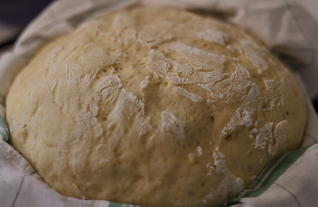
la mique MNERUAL, CC BY 2.0, via Wikimedia Commons. Source https://www.flickr.com/photos/mnerual/8180213615/in/photostream/
I hear about this family dish, especially when it turns towards winter.
The word mique comes from the Occitan language “mica ” – first introduced in the Middle Ages. It’s a traditional dish in this region of Le Perigord but also in Limousin, Quercy and Basse Correze with variations of the recipe handed down for generations. It is basically a bread, but without a crust, with a base of cereals, different types of flour, maize, eggs, milk and butter mixed with cubes of ham, duck fat and yeast.
It’s like a dumpling, which slowly cooks in a rich vegetable and meat broth. It takes over 3 hours to prepare and cook but the result is worth it.
In olden times, sometimes it was cooked in the communal oven for several families use and they would bake bread at the same time.
Here is a recipe for la mique for 10 people
Mix all the ingredients, ie flour, yeast, 6 eggs,melted duck fat, water or warm milk into a paste and form it into a ball shape. Leave it to rise for an hour.
Put it into a dishcloth and leave it for a further hour. Break it in half and reshape it into a ball and leave it again for an hour !
During this time, for an hour, cook the salted pork with all the vegetables, onions, carrots, leeks, turnips and potatoes to form a hearty broth.
Place the dumpling in the broth and leave to simmer gently for one hour.
By this time you will be hungry, Bon Appetit!
A French lady photographer. “La Vieille Demoiselle”
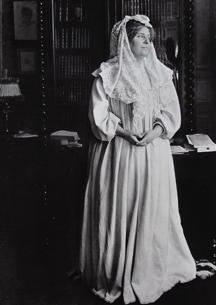
Jenny de Vasson, une femme photographe du début du siècle éditions Herscher, 1982. isbn : 2-7335-0081-https://commons.wikimedia.org/wiki/File:Jenny_de_Vasson_autoportrait_%C3%A0_Varennes.jpg
A friend lent me a book recently knowing I was interested in photography. One of the first photographers in France, was Jenny de Vasson who was born in 1872.
She grew up, an only child, within an aristocratic world, and was surrounded by artistic people . She would walk with George Sand, the writer, who was friends with her parents. From an early age nature, the woods and a love of photography played a large role in her life.
By 1899 she had her first “camera ” and installed her own photo laboratory within her parents’ home in L’Abbaye de Varennes in Fougerolles. Indre.
She began to travel extensively in France and in Europe always taking photos wherever she went. Views of daily country life, family portraits and the countryside appealed to her and she often included her parents in her photographs.
Many memories of her long voyages throughout Europe were captured in her photos. Her very first camera she had, called it “un vieux petit Kodak ” a very old little Kodak, postcard style. Apparently all her following ones had their own personalities and peculiarities of use.
She would follow all the latest technical inventions and developing techniques to produce what was, for that time, quite unique.
Sadly, she died very young, at the age of only 47, from a lung disorder. However, before that she would burn a lot of her images, not considering them of value or worth. Estimated at 3,000 photos and 5,000 negatives.
In France today her work is held in high esteem.
Fifi’s stories from rural France
1st November 2026
This section: Fiona Alderman blogging from The Salignac Foundation France
Written by : Pat Byrne

Related Pages
- Fiona Alderman: Leaving Traces
- Fiona Alderman’s blog: S.O.S. Patrimoine
- Fiona Alderman: The Baker’s Son
- Fiona Alderman: Fires, markets and the 14th July
- Fiona Alderman: First of May Salignac
- Fiona Alderman: The Calm and Not So Calm
- Fiona Alderman: The Salignac Story
- Fiona Alderman: Prix de Lausanne
- Fiona Alderman: A Cold Snap in Salignac
- Fional Alderman: The Macron Influence
- Fiona Alderman: What’s going on? in Salignac.
- Fiona Alderman: The End of the Season
- Fiona Alderman: From Fibre to Frelons
- Fiona Alderman: Storms Over Salignac
- Fiona Alderman: Continental Life in Salignac
- Fiona Alderman: The Return To Glasgow
- Fiona Alderman: Going Home – The Glasgow Project
- Fiona Alderrman: Cafe´ Life in France
- Fiona Alderman: A Quarter of a Century
- Fiona Alderman: No Internet and no cooker